How the state prices out growth
Recent private sector analysis reported by Nikkei Asia has quantified what businesses have been saying for years
Published February 18, 2026
Pakistan’s growth failure is often explained away through familiar cliches: low productivity, weak exports, lack of innovation, or insufficient entrepreneurship. These are symptoms, not causes. The real problem lies deeper: in a state-engineered cost structure that has made doing business prohibitively expensive and structurally irrational.
A recent private sector analysis reported by Nikkei Asia has now quantified what businesses have been saying for years: operating a business in Pakistan is 34% more expensive than in comparable South Asian economies. That single statistic is not merely an indictment of policy; it is a post-mortem of Pakistan’s growth model.
According to the study conducted by the Pakistan Business Forum (PBF), the excess cost is not incidental or cyclical. It is structural, cumulative and policy-induced. Fuel taxes, electricity tariffs, interest rates, currency depreciation and an extraordinary effective tax burden together form a lethal cocktail that prices domestic industry out of both regional and global markets. This is not capitalism failing. It is the state failing the economy.
The PBF’s findings, based on industrial data up to December 2025, expose a simple but devastating reality. Pakistan’s firms operate under energy and fiscal costs that no competitor in the region is forced to bear.
Electricity tariffs average Rs34 per unit, while the regional average hovers around Rs17. Fuel is burdened with an additional petroleum levy of roughly Rs80 per litre, converting energy not into an input but into a fiscal extraction mechanism.
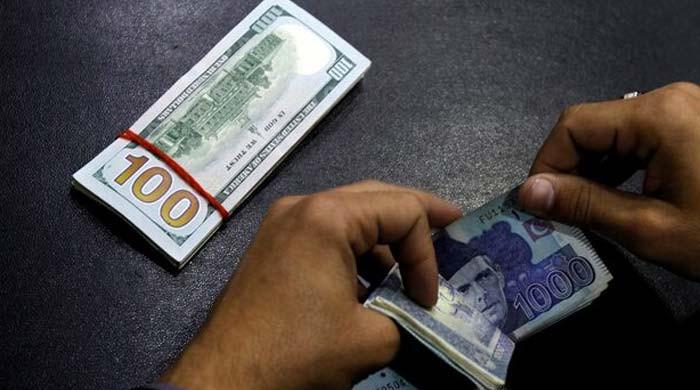
Interest rates remain at 12.5%, nearly double those in neighbouring economies where capital is treated as a facilitator of growth rather than a revenue source. Overlay this with a currency that collapsed from Rs110 per dollar in 2018 to around Rs280 by December 2025, and imported inputs — raw materials, machinery, intermediate goods — become prohibitively expensive. To call this a “challenging business environment” is a euphemism. It is an engineered disadvantage.
Most alarming is the effective tax burden, which the PBF estimates can reach up to 55% for companies, far above regional norms. This is not taxation in the classical sense of financing public goods. It is fiscal overreach that systematically cannibalises investible surplus.
One of the most revealing aspects of the Nikkei-reported data is not about firms but about people. Gallup Pakistan shows that salaried employment now accounts for 60.1% of the workforce, up from 53.4% in FY2010-11, while self-employment has declined from 24.4% to 21.8% over the same period.
This shift is often misread as modernisation. It is not. In Pakistan’s context, it reflects risk aversion induced by a hostile business climate. When the cost of compliance, energy, finance and taxation overwhelms potential returns, rational individuals choose employment over enterprise. This is a policy outcome.
A young business graduate in Islamabad, quoted by Nikkei, abandoned plans to open a restaurant after being "hounded by so many government departments". His experience is systemic. The state’s licensing obsession, regulatory fragmentation and compliance fetish raise fixed costs to levels that extinguish small and medium enterprises before they are born.
The workforce distribution data over nearly three decades reveals a quiet but profound structural shift in Pakistan’s economy. In 1996-97, self-employment constituted around 28% of the workforce, alongside a significant share of contributing family and unpaid labour — categories that traditionally reflect small enterprise activity, family businesses and informal entrepreneurship. By 2010-11, self-employment had already declined to 24.4%, while salaried employment rose sharply.
The latest figures for 2024-25 complete this transformation: over 60% of the workforce is now salaried, while self-employment has fallen further to just 21.8% and unpaid family labour to about 14%. This is not a benign modernisation trend. In Pakistan’s context, it signals the systematic erosion of entrepreneurial space, where rising energy costs, punitive taxation, regulatory harassment and expensive credit have made independent business activity economically irrational.
Instead of producing a dynamic class of risk-taking entrepreneurs, Pakistan’s policy environment is steadily converting potential job creators into job seekers — an outcome fundamentally incompatible with sustained growth, export expansion and productivity-led development.
Bilal Ghani of Gallup Pakistan correctly identifies another structural distortion: Pakistan’s trade and industrial policies systematically restrict access to cheaper foreign inputs in the name of protecting domestic producers. This is import substitution without competitiveness, protection without productivity.
Instead of integrating Pakistani firms into global value chains, policy forces them to rely on costlier domestic inputs, raising production costs while delivering no gains in quality or scale. The result is a manufacturing sector that is simultaneously protected and uncompetitive — a contradiction that no economy can sustain.
Add to this Pakistan’s perception as a high-risk jurisdiction — due to terrorism, money-laundering concerns and geopolitical tensions — and firms face layers of due diligence, certification and compliance costs unknown to competitors in other developing economies. These non-tariff costs disproportionately punish exporters and technology firms, the very sectors Pakistan claims it wants to promote.
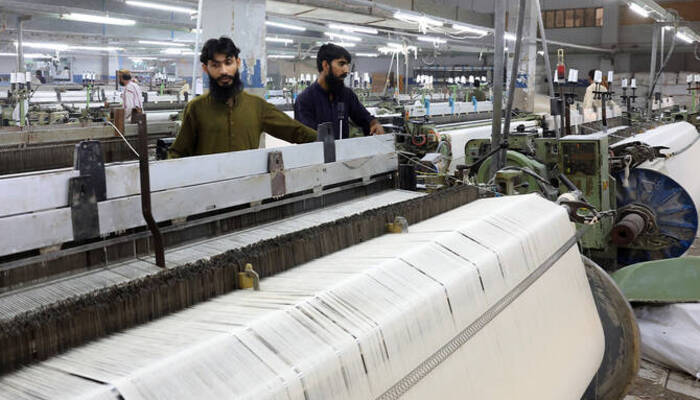
The impact on exports is both severe and predictable. Pakistan’s export performance has stagnated since 2021, with particularly damaging consequences for textiles, which still account for around 60% of total exports. Hundreds of medium-sized textile firms have shut down in recent years, as noted by PBF’s chief organiser Ahmed Jawad. This collapse is not the result of inefficiency alone. When electricity costs double those of competitors, when financing costs are punitive and when regional trade agreements — such as the EU-India arrangement — tilt the playing field further, survival itself becomes uncertain. Pakistan’s exporters are not losing markets because they are incompetent; they are being priced out by their own state.
At the root lies a deeper contradiction: the state has converted energy pricing and taxation into instruments of short-term fiscal stabilisation, ignoring their long-term growth consequences. Petroleum levies substitute for structural tax reform. Electricity tariffs plug budgetary holes created by inefficiencies elsewhere. High interest rates compensate for fiscal indiscipline. This is a survival strategy — and a deeply flawed one.
By extracting maximum revenue from a shrinking formal sector, the state accelerates informality, discourages investment and erodes the tax base it seeks to protect. The result is a vicious cycle: higher taxes to cover falling revenues, higher costs to sustain inefficient systems, and lower growth to justify further extraction.
In December last year, the PBF wrote to Prime Minister Shehbaz Sharif, urging regionally competitive electricity tariffs and more rational corporate taxation. These demands are prerequisites for survival.
Pakistan must unlearn three dangerous assumptions. First, that energy can be priced as a fiscal tool without destroying industry. Second, that businesses will continue to operate regardless of cost asymmetries. Third, that entrepreneurship can flourish under regulatory hostility and financial repression.
Growth does not occur in policy speeches or five-year plans. It emerges where the cost of risk is lower than the reward. Pakistan has inverted this equation.
The data reported by Nikkei Asia does not merely diagnose a problem; it forces a choice. Pakistan can continue to tax, tariff, and regulate its way into stagnation, or it can realign its fiscal, energy and regulatory architecture toward competitiveness.
High taxes and expensive energy are not neutral policy instruments. In Pakistan’s case, they have become anti-growth weapons, quietly dismantling entrepreneurship, hollowing out exports and converting a nation of potential producers into reluctant employees. Until this reality is acknowledged and corrected, no amount of rhetoric about investment, exports, or innovation will revive Pakistan’s growth model. The arithmetic is unforgiving, and the evidence is now incontrovertible.
The writer is an advocate of the Supreme Court and specialises in studying the global narco-arms economy and its linkages with terrorism.
Disclaimer: The viewpoints expressed in this piece are the writer's own and don't necessarily reflect Geo.tv's editorial policy.
Originally published in The News