Building health, one household at a time
Vaccines alone cannot eradicate the crippling disease without trust and empowered polio workers
Published March 31, 2026
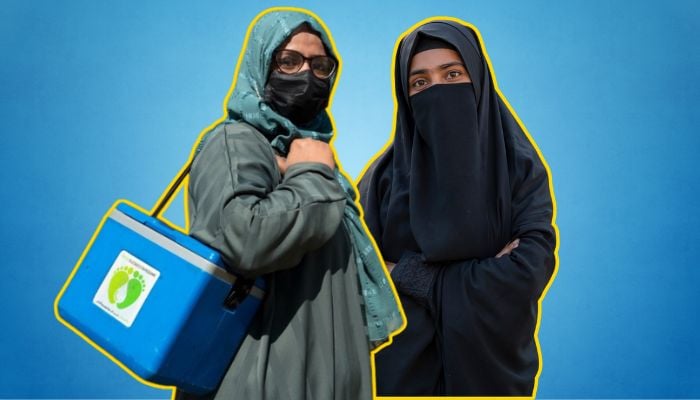
Across Pakistan, thousands of frontline health workers, many of them women, go door to door to ensure children receive lifesaving polio vaccines. Their work requires patience, persistence and, above all, the ability to build trust with families in the communities they serve. Their stories rarely make headlines. Yet without them, eradication would remain a promise, not a possibility.
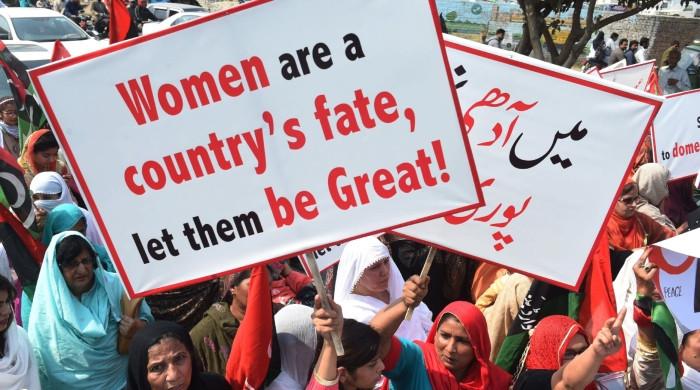
Each March, as the world celebrates women, we are reminded that recognising their contributions cannot be limited to a single day. The occasion invites us to reflect on the lifelong commitment required to advance rights, dignity, and opportunity for women everywhere.
Across Pakistan, that commitment shows in women taking the right to health door to door, demonstrating that lasting social change starts with trust, respect, and human connection.
Convincing communities to open doors
Erum, who is an area in-charge working under the polio eradication programme in Karachi, never finished school and had not even passed her matriculation exams. When she joined the polio programme, she did not see herself as an advocate or a changemaker; she was simply a mother trying to survive.
Her own child was born with impaired hearing and was therefore unable to speak. She knew intimately what it meant to sit with uncertainty, live in a world not built for her child, and fight for care when others quietly lowered their expectations.
At first, the programme was just work. But during awareness and training sessions, something shifted. Erum realised that education was not a privilege reserved for others; it was a tool anyone could learn to use to their advantage. If she understood vaccines, immunity, and prevention, she could help others understand. If she could explain the science in words that families trusted, she could protect children before disability had a chance to take hold.
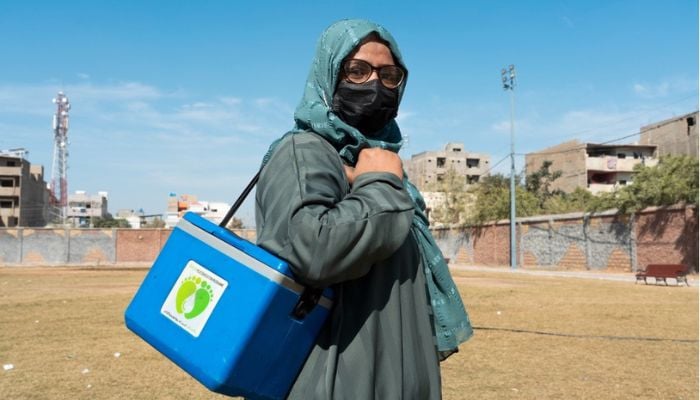
She began teaching herself, focusing on English, so she could grasp technical materials. She learnt Bengali, so she could speak directly to families in their own language. She practised late into the night. Slowly, the woman who once doubted her own schooling became someone neighbours turned to for advice.
But trust doesn't come easy.
Doors were slammed in her face. Families turned her away before she could finish a sentence. Others accused her of bringing harm rather than offering protection. In the heat, weighed down by long walks, she knocked on their doors nonetheless.
When families refused, she did not always leave. She stayed. She listened. She helped wash dishes, soothed crying babies, and checked in with families about fevers, coughs, and other health concerns. Weeks turned into months. Refusals softened into conversations. Conversations became consent.
Her persistence was not stubbornness; it was empathy sharpened by experience. She had fought for a cochlear implant for her own child. She understood what preventable suffering looked like. Every refusal felt personal because every child reminded her of her own.
Holding onto perseverance despite opposition
Faiza’s journey began at eighteen. As a resident of Karachi, she joined the programme to help her single mother make ends meet. What started as a financial necessity became something else: a quiet determination to stand her ground. Today, she continues her fight as a vaccinator.
Each campaign brought a different reception. Some homes welcomed her with water and shade. Others questioned her intentions.
“Why do you come every month?” they would ask, suspicion heavy in their voices.
The repetition, campaign after campaign, tested her endurance as much as the terrain did.
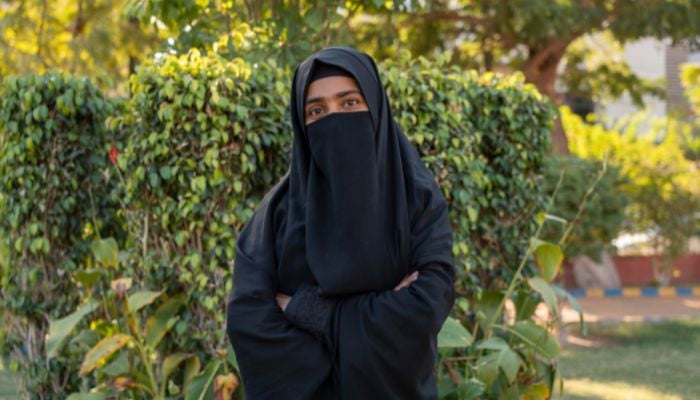
Once, a family beckoned her team to the doorway, only to deliberately slam it hard on her hand, leaving a bruise that lasted days and a memory that endured even longer. Yet when the next campaign began, she returned to the same street.
Even when she was unwell. Even when she was exhausted. Even when respect felt conditional.
“If you don’t want to vaccinate,” she says quietly, “at least say no with respect.”
The work is relentless. The ask is simple: protect your children.
In Pakistan’s fight against polio, the frontline is not a conference room or a policy debate. It is a narrow lane under the midday sun. It is a hesitant knock. It is a woman holding a vaccine carrier in one hand and resilience in the other, standing firm against fatigue, misinformation, and sometimes hostility.
These women are not only delivering vaccines. They are building the trust that makes vaccination possible.
Their work reminds us that social and behavioural change does not begin with messages alone. It begins with recognising dignity, with listening, respecting communities, and valuing the women who show up, again and again, to serve them.
They are not asking for applause. They are asking for dignity.
They show up every time to protect children who are not their own. The least we can do is open the door with respect.
Eradication is not achieved through vaccines alone. It is achieved through trust, and trust begins with how we treat the women who carry it to our doorsteps.
Minahil Mustafa works with the Pakistan Polio Eradication Initiative.
Thumbnail illustration by Geo.tv