China seen as 'potential guarantor' in Iran-US talks amid Pakistan outreach
Experts suggest Islamabad exploring Beijing’s role in facilitating possible negotiations framework
Published March 31, 2026
- Iran seeks firm guarantees before entering talks.
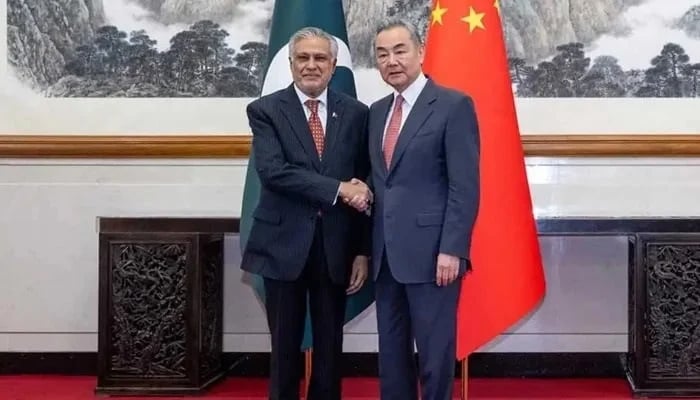
- DPM Ishaq Dar set to visit Beijing for consultations.
- Analysts term Pakistan role significant in diplomacy.
China is being viewed as a potential guarantor in any future talks between Iran and the United States, as diplomatic efforts intensify with Pakistan playing an active role in exploring possible frameworks.
According to Washington-based scholar Vali Nasr, Iran has sought guarantees in any potential agreement with the US, with indications that Deputy Prime Minister and Foreign Minister Ishaq Dar was travelling to China to explore Beijing’s role as a guarantor.
He noted that such an idea would likely not be pursued without being floated with both Washington and Beijing, though there was no certainty that China would accept the role.
He added that Beijing was increasingly emerging as a frontline player in ongoing diplomatic efforts.
The remarks come as Dar was visiting China at the invitation of Chinese Foreign Minister Wang Yi, as Pakistan steps up diplomatic engagement amid the ongoing war involving Iran, the United States and Israel.
Pakistan has emerged as a key facilitator between Iran and the United States, serving as an intermediary for messages between the two sides as the war continues.
On Sunday, DPM Dar said a quadrilateral meeting of the foreign ministers of Pakistan, Saudi Arabia, Turkiye and Egypt had called for an immediate and permanent end to the ongoing war in the Middle East.
Separately, speaking on Geo News programme 'Capital Talk', Chairman of the Pakistan-China Institute (PCI) Mushahid Hussain Syed said China’s role at this stage was “very important”, adding that Iran required a strong guarantor for any ceasefire and that China could fulfil that role.
He further said Beijing was keen to see a ceasefire achieved ahead of a potential visit by US President Donald Trump, suggesting that China could link the visit, expected in May, with progress on ending hostilities.
Defence analyst Arshad Malik also welcomed Ishaq Dar’s expected visit to China, saying Pakistan was currently in a strong position and was handling the situation effectively.
The diplomatic push comes amid attempts to create a window for negotiations to end the more than month-long war between the United States, Israel and Iran, which began on February 28 and has affected the wider Middle East.
The conflict has also had serious economic consequences, with Iran’s effective blockade of oil and gas shipments through the Strait of Hormuz since the attacks began causing economic pain across the world.
As the war entered its second month, there were no signs of a slowdown. The war has killed thousands of people and has also affected other countries in the region. Over the weekend, major aluminium plants in Bahrain and the United Arab Emirates were damaged in air strikes.
The UAE is also seeking reparations from Iran for attacks on civilians and critical facilities, along with guarantees to prevent any repeat of such incidents.
The conflict widened further after Yemen’s Iran-aligned Houthis joined the war on Saturday by launching their first attacks on Israel, raising fears that they could target and potentially block another key shipping route, the Bab el-Mandeb Strait. Israeli authorities said on Sunday they had intercepted two drones launched from Yemen.