'Economy out of ICU': Asif says Pakistan may see 6-7% GDP growth in coming years
Minister says Pakistan avoided default through prudent economic management and policy measures
Published June 16, 2026
- Minister assures petroleum price relief passed to consumers.
- Stresses fair taxation system for stronger compliance, growth.
- Rejects pressure politics in Azad Jammu and Kashmir.
Defence Minister Khawaja Asif said on Tuesday that Pakistan's economy has moved out of the "ICU" phase and suggested that the country could witness 6-7% GDP growth in the coming years.
His remarks came after the federal government announced a Rs18,771 billion (Rs18.8 trillion) budget for FY27, as authorities seek to stabilise economic conditions while managing fiscal constraints linked to energy pressures and broader regional developments.
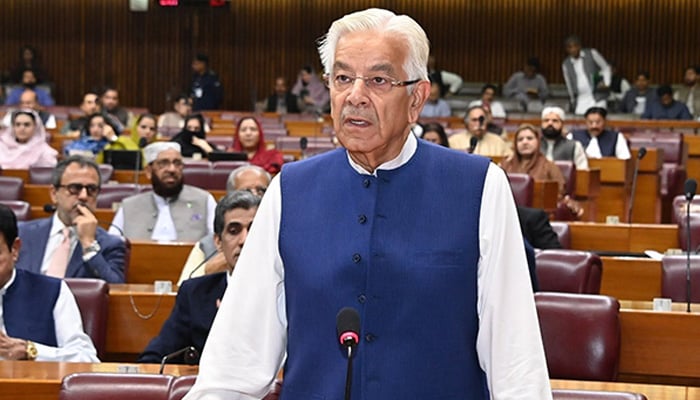
Speaking during the National Assembly debate on the Federal Budget 2026-27, Asif said the country had been on the verge of default when the current government assumed office but had since achieved stability through prudent economic management.
"The economy has emerged from the ICU and is now moving towards stability," he said, expressing optimism that the country's GDP growth rate could reach 6% to 7% within the next one to two years.
The minister also assured the House that reductions in petroleum prices would be passed on to the public and underscored the importance of establishing a fair and rational taxation system that encourages voluntary tax compliance and strengthens national economic development.
Iran-US preliminary peace deal
The defence czar also highlighted Pakistan's recent diplomatic achievements, crediting Prime Minister Shehbaz Sharif, Chief of Defence Forces (CDF) Field Marshal Syed Asim Munir, and the entire national leadership for enhancing the country's international standing through prudent decision-making and effective diplomacy.
Islamabad achieved a historic diplomatic victory on Monday when US President Donald Trump announced that Washington has signed a memorandum of understanding (MoU) with Iran to end the war in the Middle East.
Pakistan has been acting as a key mediator between Tehran and Washington since the Middle East conflict erupted on February 28, following US-Israel strikes on Iran.
AJK unrest
Commenting on the situation in Azad Jammu and Kashmir (AJK), the minister maintained that decisions regarding refugee seats should be made by the elected assembly and representatives of the region rather than by pressure groups.
He rejected attempts by foreign-funded elements to influence local political matters and said all legitimate demands had already been addressed through constitutional and democratic mechanisms.
The minister opposed proposals aimed at creating divisions on ethnic grounds, saying that people from diverse communities had lived together peacefully across Pakistan for decades while preserving their cultural identities.
He urged lawmakers to avoid political point-scoring on issues related to national unity and security.