The hidden role of agriculture in population growth
Recognising agriculture's role in our overpopulation crisis and pursuing agricultural reform may prove essential to addressing it
Published June 30, 2026
Previously, it was politically incorrect to discuss overpopulation. Now a new political correctness has emerged, even amongst “overpopulation activists”. Many of them are not just ignoring the causes of overpopulation, but are in fact obstructing understanding it for the sake of political correctness.
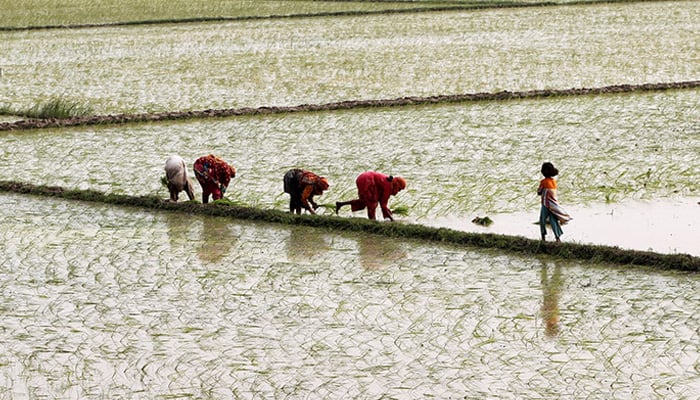
Going back even before our independence, we adopted a policy of destroying our natural ecosystems and turning them into farmlands to produce heap loads of extra food. Even drier, previously infertile desert areas of Sindh were irrigated by being channelled to the river Indus with irrigation systems built by the British.
Following independence, we continued destroying our ecosystems and creating more farmlands out of them to produce lots of extra low-priced food. Many feudal landlords and corrupt government officials probably profited from this practice, but the people were the main casualties: the population began to grow rapidly in response to the massive increase of this extra calorie-rich food.
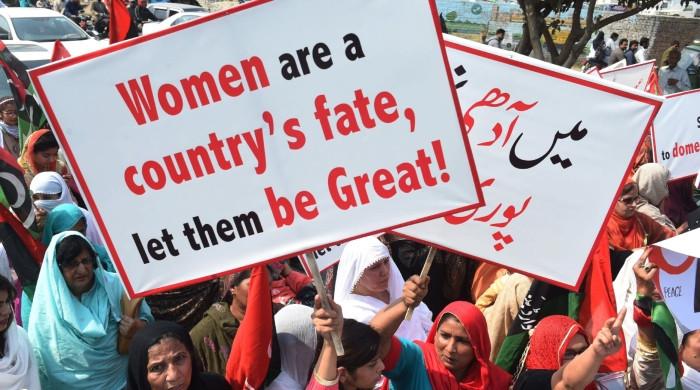
We also know that nature does not care if the female of a species is educated or not and that science does not care for political correctness. They show us something very different from popular ideological public ranting.
For any species to procreate to such large numbers, it must have a large carrying capacity. This has been demonstrated on animals and insects, both in controlled environments and uncontrolled natural conditions, which is what the Prey-Predator Equations are based on.
In simplest terms, the Prey-Predator Equations state that when vegetation increases in the wild, the herbivorous animals eating it will increase in numbers as they now have more nutrients to reproduce. The increase of the herbivores eventually results in an increase of the carnivorous animals eating them as they too have more nutrients to increase their numbers. The increase of the carnivorous animals eventually decreases the herbivorous population as there are more predators eating them. With the decrease of herbivores, the carnivorous populations’ birthrate also begins to decrease as there is less prey left to sustain their birthrates. The decrease of herbivores also allows the vegetation to increase again. The decrease of carnivores and increase of vegetation in turn allows the herbivorous population to increase once again, and the same cycle continues indefinitely.
Humans were part of this cycle before they developed agriculture. But this was dependent on climate and geography. Regions of rougher terrain, dry deserts, and frigid sub-zero temperatures, as well as regions of extreme tropical rainfall, have restricted conditions for agriculture and therefore endure slower human population growth. This is why some countries have smaller populations compared to others.
Those who deny the scientifically established food-population dynamics fail to explain why so many non-fertile regions of the world have such small populations despite lacking women’s rights and girls’ education. They also fail to explain how so many people, rich or poor, can be born and alive at the same time without the enormous amount of food to sustain them and grow their numbers.
We see lots of poor, starving people on our city streets that show clear signs of protein deficiency, but what about calories? How could they possibly have such large families if they did not have so many calories to fuel their growth? They come from extremely fertile rural lands which fuel high birthrates. This in turn results in too many people unable to share land and so we see an influx into the cities while the birthrates in the rural areas continue to grow, resulting in a continuing influx into urban areas.
Currently, our scientists are working on fertilising more land to produce even more food. What do they think will happen as a result of this? The population will only increase as the carrying capacity is being increased. What would have happened if Pakistan had left its ecosystems alone and produced food from already previous farmland for only about thirty-four million? The population would only remain at that approximate number with minor fluctuations because that is what the carrying capacity would have been set at. That is how the laws of ecology work. To suggest otherwise is to suggest the impossible.
There have been statistics showing urbanised women have lower birthrates, but these statistics leave out too many economic and ecological factors that do not provide a clear understanding of population dynamics. These factors are too long for me to discuss in this article, unfortunately. These statistics are at best unhelpful.
Another common myth has persisted that overpopulation is a result of eliminating infant mortality by improvements in medicine. However, scholars George J Amelagos, Alan H Goodman and Kenneth H Jacobs challenged this claim in their 1991 research paper, arguing that despite more infant mortality, agricultural societies still managed to increase their populations. This is consistent with scholar Jean-Pierre Bocquet-Appel’s 2008 paper, which cites archaeological findings of larger human remains in ancient farming societies as opposed to hunter-gatherer ones.
Ecologists have both acknowledged carrying capacity when studying changes in animal/insect populations and even proposed adjustments in them when trying to regulate their numbers. Yet very few have discussed it in the case of humans because of its sensitivity. Humans don’t like being compared to animals, thinking the same biological laws don’t apply to them, and that is a main part of the problem. Only after dispelling such political correctness and accepting that it was excessive agriculture and not lack of female rights/education that gave us this situation can we come up with a realistic agricultural reform plan. We cannot hope to regulate our population growth without regulating our food production; especially human fertilising nutrients.
Such a plan would have to involve a gradual and carefully calculated flattening of food production in accordance with the size of the population and no more. Once birthrates begin to stabilise, a second phase should be enacted to gradually decrease food production, again with careful calculation. If done right, birthrates in the country would involuntarily drop as the number of birth-inducing nutrients is diminishing amongst the population. In such a situation, farmers and agricultural corporations would be forced to export most of their food and sell a limited amount on the domestic market. Such a reform plan would have to be developed and led by government-appointed ecologists, mathematicians, demographers and perhaps AI.
Women's rights and education, while an important fundamental human rights in any situation, cannot be relied on to save us. Like all resources, education spaces are limited. How do we hope to educate millions of girls being born each year from kindergarten until college graduation? It has never been done before, let alone proven.
Each and every one of these girls being born annually is only increasing numerically. Their growth, especially in rural areas, is being fuelled by agriculture. Do we seriously think we can educate each and every one of them when they grossly outnumber the limited school spaces set for them? Also, what are the guarantees that each and every one of them will limit their birthrates by free will?
We cannot indefinitely afford to ignore the true causes of our overpopulation crisis — which was almost entirely rooted in biology and less in sociology all along — all for the sake of political correctness. Time is also not in our favour. If we do not adopt such radical agricultural reforms sooner, we are sentencing our country to certain doom.
Facing agriculture as the true cause of our overpopulation crisis and agricultural reform as our inevitable saviour might not seem as inspiring and politically correct as women’s rights and girls’ education, but to repeat myself, nature does not care if the female of a species is educated or not, and science does not care for political correctness.
Disclaimer: The viewpoints expressed in this piece are the writer's own and don't necessarily reflect Geo.tv 's editorial policy.