Atlas V rocket sends Amazon's 29 Leo internet satellites to orbit from Florida
Thursday’s launch leaves behind six Atlas V rockets in the fleet, all booked for Boeing’s Starliner missions
Published July 02, 2026
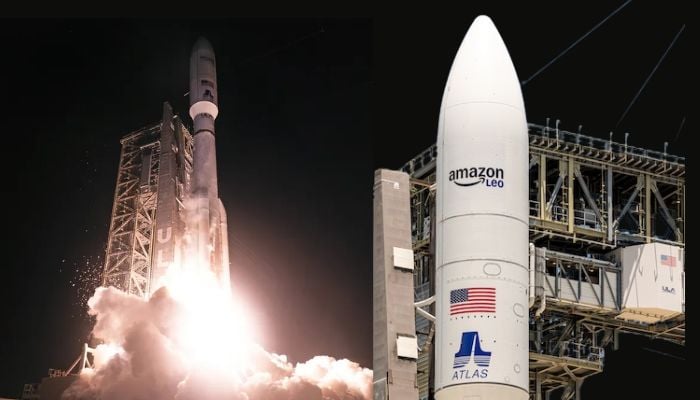
An Atlas V rocket carrying 29 Amazon Leo internet satellites lifted off on Thursday, July 2 at 12:30 a.m. EDT.
The Atlas V rocket followed a north-easterly trajectory at liftoff.
United Launch Alliance (ULA) launched another batch of broadband satellites to orbit early Thursday morning, July 2.
The rocket carried 29 internet satellites onboard Atlas 5, which is part of Jeff Bezos’s Amazon Leo 8 mission.
The mission is also referred to as Leo Atlas 8 (LA-08) by Amazon.
Commenting on the successful liftoff, Amazon Leo Director of Launch Systems Melissa Wuerl said in a statement, “Atlas 5 has played a critical role in the early deployment phase for Amazon Leo, launching 224 satellites with a 100 percent success rate across all eight missions.”
Thursday’s launch leaves behind just six Atlas V rockets in the fleet, and all are booked for Boeing’s Starliner missions.
The United Launch Alliance announced that all of the satellites have accomplished deployment in low Earth orbit (Leo) as planned.
Amazon’s mega constellation in LEO is expected on day to be comprised of about 3,200 satellites.
It is aimed at competing with SpaceX’s Starlink network, which currently has deployed roughly 11,000 satellites.
For context, until now, around 4100 Amazon Leo craft have reached orbit on a total of 15 missions, onboard three different rockets: Atlas V, SpaceX’s Falcon 9, and Arianespace’s Ariane 6.