NASA administrator reacts after SpaceX's Falcon 9 rocket hits the Moon at 5,400 mph
Falcon 9’s impact to the lunar surface provides a rare first opportunity to attempt the recording of artificial impact in real-time
Published August 05, 2026
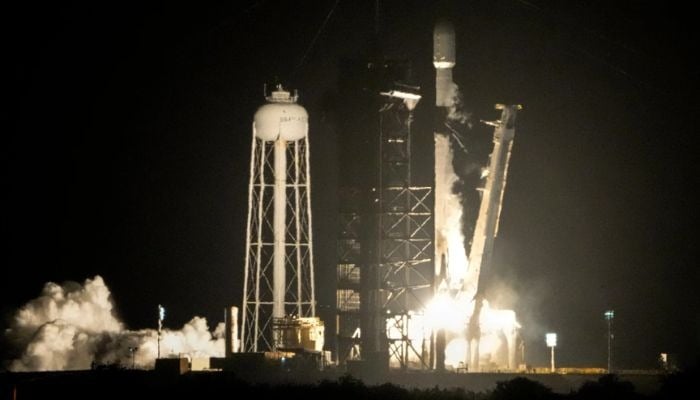
A part of SpaceX’s Falcon 9 rocket, travelling at 5,400 miles per hour, on the course of collision to the moon is believed to have crashed on the lunar surface. The rocket was expected to make an impact on Wednesday morning and experts state that verification of the event could take hours.
National Aeronautics and Space Administration’s (NASA) Science and Dragon Programs Director at SpaceX, Julianna Scheiman, explained that the upper stage of the rocket was left in space and now a mixture of solar activity and gravity forces have put it on a path toward the moon.
The rocket’s collision with the moon poses no risk to Earth. It is expected that the impact might create a crater on the lunar surface, measuring 65 to 90 feet in diameter.
A study titled Observational planning for the 2026 August 5 Falcon 9 Upper Stage lunar impact published in the arXiv states that the Falcon 9’s impact to the lunar surface provides a rare first opportunity to attempt the recording of artificial impact in real-time.
The study's authors, including NASA researchers, said: “This event provides an opportunity to test a pipeline for localising impacts on the lunar surface for future seismic experiments, investigating the dust and plume dynamics from impact events on the Moon, and considering hazards from artificial space debris impacts."
"Both professional and amateur astronomers are encouraged to attempt observations of this event.”
Earlier, NASA Administrator Jared Isaacman also brushed off the collision as “not a big deal.”
He reacted to the crash on the Moon after the impact via a post on X. The commercial astronaut wrote, "For those interested in a spent booster impacting the lunar surface, this occurrence has decades of history, going back to Apollo era, when NASA intentionally crashed spent stages into the Moon for science and seismic reseach."
He continued, "This reality is that meteroids strike the lunar surface hourly, with impacts comparable to this upper stage occuring roughly every six days. The future lunar base will incorporate reusable spacecraft that no only deliver astronauts and payloads, but also become a part of the infrastructure itself."
Experts warn with the increasing quantity of space junk, some collisions could become common, posing a threat to life on Earth.