Chinese find an alternate waterway to bypass Strait of Hormuz: Here's how effective it is
Strait of Hormuz typically accounts for 20 percent of all global oil shipments
Published August 10, 2026
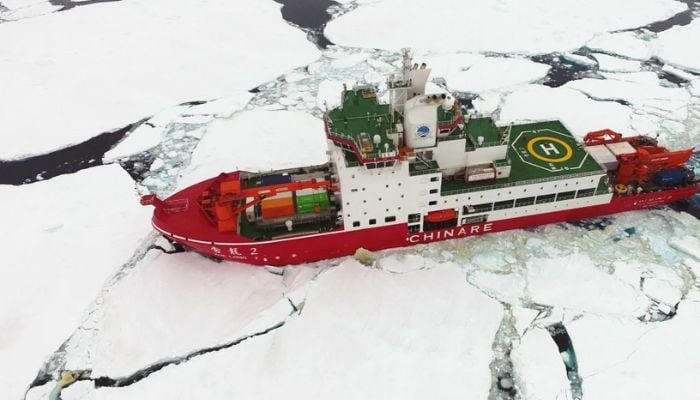
China has recently opened an alternative trade route to transport goods across the arctic area; thus, allowing China to possibly avoid several of the world’s primary maritime chokepoints, including the Strait of Hormuz, during a period where political unrest continues to hinder normal trade routes.
This alternative route, called "the ice silk road" connects China's Ningbo port with England’s Felixstowe port via sailing up the northern coastline of Russia (alongside the Arctic Ocean) and utilizing China's newly built polar silk road shipping route. China's ship line, Sea Legend, started offering their first weekly containerized shipment along this new shipping lane on July 21st, 2026.
This route has grown in prominence due to increasing risk to all of the world’s major shipping lanes, i.e., Strait of Hormuz and Bab El Mandab in Red Sea. Shipping companies utilizing the Arctic shipping corridor can travel between Asia and Europe without needing to utilize their southbound traditional shipping routes.
The largest benefit of the arctic shipping route is its ability to potentially shorten the length of time it takes to complete a trip. Based upon Chinese reports traveling between east asia and europe along the northern sea route can cut a typical voyage from approximately 40-50 days down to approximately 18-19 days depending on arctic ice conditions at the time.
Although, due to the decreasing amount of arctic sea ice over recent years, China now has access to longer open water seasons to commercially transport products, the arctic shipping corridor is not navigable all year round.
Ships cannot sail on the arctic shipping corridor at all times of the year because the northern sea route is only navigable for a short portion of the year. In addition, ships must contend with constantly changing arctic ice conditions.
Also, vessels operating within the arctic shipping corridor require specialized equipment for navigating through the harsh conditions. Emergency support and rescue services also remain significantly less developed compared to the emergency services located on traditional international shipping routes.
Therefore, China's newest shipping route is intended to provide an additional opportunity for China to transfer goods between Asia and Europe if other routes are unavailable or become too costly or unsafe.
In particular, this development is timely given the current instability surrounding the Strait of Hormuz. The key oil trade route (currently blocked by Iran) typically accounts for 20 percent of all global oil shipments and has seen continuous disruptions since U.S.-Israel got involved and waged war on Iran. Any extended interruption in shipments through this critical passageway would be detrimental to all global energy markets.
Similarly, the arctic shipping corridor provides China with a means to reduce its dependency on those maritime choke points connecting Asia with Europe. Research indicates that the northern sea route could serve as a strategic back-up when geopolitical events prevent China from using the Suez canal.
However, there is an issue with this route. The arctic is arguably one of the harshest environments for commercial shipping in existence. This environment includes heavy amounts of ice, extreme climate conditions, few harbors and rescue facilities, and a seasonal nature of operations. Therefore, it is currently unable to accommodate the same level of global trade as do existing shipping corridors.
Despite these limitations, China has initiated its own version of what it refers to as the “polar silk road.” The polar silk road is an integral component of the country’s larger strategy in regards to the Arctic. The polar silk road aims to create an intercontinental transportation network linking key economic centers through shipping lanes in the northern hemisphere.
Thus far, China's actions demonstrate that China views the arctic as more than just a remote cold area. As geo-political tensions continue to disrupt global shipping routes, China and Russia are beginning to view the arctic as a potential new trading corridor between Asia and Europe for China.