Perseid meteor shower peaks this Wednesday with no expected return until 2125
Perseid meteor shower: Up to 100 shooting stars per hour expected
Published August 10, 2026
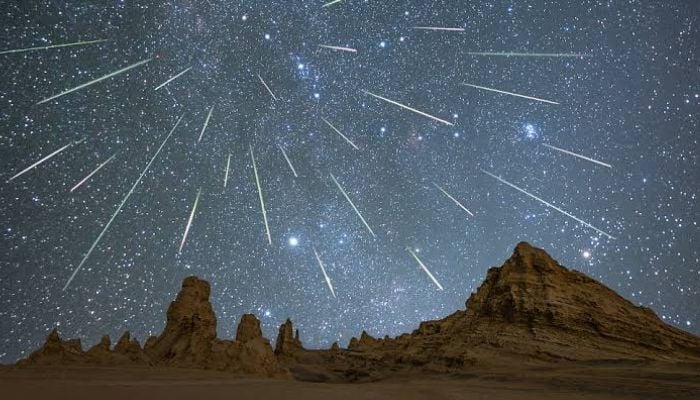
Skywatchers across the Northern Hemisphere are in for a treat this week as the annual Perseid meteor shower reaches its peak Wednesday night, August 12, into Thursday morning, August 13, with ideal viewing conditions due to the new moon.
The Perseids is considered as one of the year’s most reliable and dazzling meteor showers that will produce up to 100 meteors per hour under dark skies.
As estimated by The American Meteor Society, around 30 to 50 meteors per hour are visible from rural locations. This year, the Perseid shower coincides with a new moon, which makes conditions even more favourable.
The Pereids are actually debris from comet 109P/Swift-Tuttle, which is an icy ball that orbits the Sun every 133 years and isn’t scheduled for a return visit until 2125. The last observation of a similar meteor shower dates back over 2,000 years.
Perseid meteor shower is famous due to its bright fireballs as well as its occurrence in summer weather. Meteors are most likely to appear in the period between midnight and sunrise when the constellation of Perseus will be up in the northern sky, and meteors will seem to radiate from that constellation.
For observing the meteors, it is necessary to step out in the dark hours away from the light pollution of cities, spend 30 minutes to get the eyes accustomed to the dark environment, and not use cell phones.
Countries where the Perseids will be visible
North America
- United States (all 50 states)
- Canada
- Mexico
- Central American countries (Guatemala, Honduras, Costa Rica, etc.)
Europe
- United Kingdom (England, Scotland, Wales, Northern Ireland)
- Ireland
- France
- Germany
- Spain
- Italy
- Portugal
- Greece
- Scandinavian countries (Norway, Sweden, Finland, Denmark, Iceland)
- Eastern European countries (Poland, Ukraine, Romania, etc.)
- Russia (western and central regions)
Asia
- China
- Japan
- South Korea
- India
- Pakistan
Middle Eastern countries (Turkey, Israel, Saudi Arabia, UAE, etc.)
Southeast Asian countries (Thailand, Vietnam, Philippines, etc.)
Africa (Northern Parts)
- Egypt
- Morocco
- Algeria
- Tunisia
- Libya
Despite the Perseids being one of the best viewed natural phenomena, the Perseids are not visible across the whole of the Southern Hemisphere because the radiant point (the constellation of Perseus) rises too high into the Northern sky, or even below the horizon.