Russia fires at NATO member's military aircraft over Baltic Sea: Could it trigger Article 5?
One of them came within 'a matter of metres' of the aircraft
Published September 16, 2026
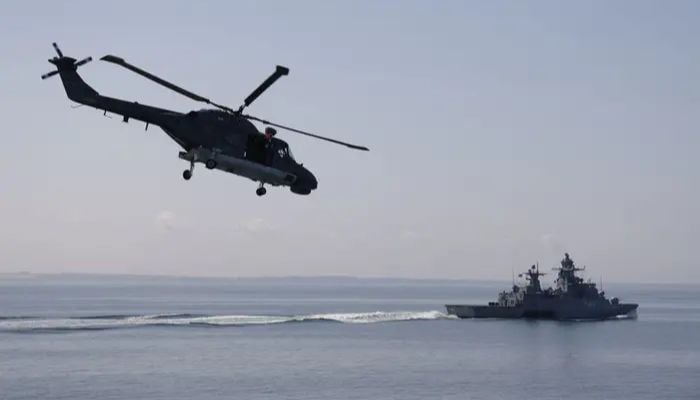
A Russian warship fired two flares towards a Danish military helicopter over the Baltic Sea, with one passing within metres of the aircraft in an incident that has further raised tensions between Russia and NATO.
The Danish Air Force Fennec helicopter was carrying out a routine mission on Monday to photograph a Russian frigate sailing in international waters off Denmark.
There was no warning.
According to Danish Defence Minister Jeppe Bruus, the Russian ship did not make radio contact with the helicopter before firing the two flares.
One of them came within “a matter of metres” of the aircraft.
Denmark has carried out similar missions many times before to monitor Russian warships passing through the area.
But Bruus said he could not remember another incident like this and warned that Russia appeared increasingly willing to take risks.
Denmark has now summoned the Russian ambassador over the confrontation.
Danish Foreign Minister Lars Lokke Rassumen said: “This is completely unacceptable and could have put human lives at risk.”
Prime Minister Mette Frederiksen also accused Moscow of trying to intimidate NATO countries.
Russia, however, has blamed Denmark.
Russian Ambassador Vladimir Barbin claimed Danish military helicopters had previously carried out “dangerous manoeuvres” around Russian warships and accused Monday's helicopter of provocative behaviour. Moscow said it was investigating what happened.
So, could Russia firing towards a Danish military aircraft trigger NATO's Article 5?
Not automatically. Article 5 treats an armed attack against one NATO member as an attack against all, but the alliance has considerable political room in deciding what qualifies as an armed attack and how to respond.
Denmark has not invoked Article 5 over Monday's incident.