Who is Oliver Riedl? Amateur detectorist who found Germany's record silver coins
Record Roman silver hoard unearthed in Germany by amateur detectorist
Published September 22, 2026
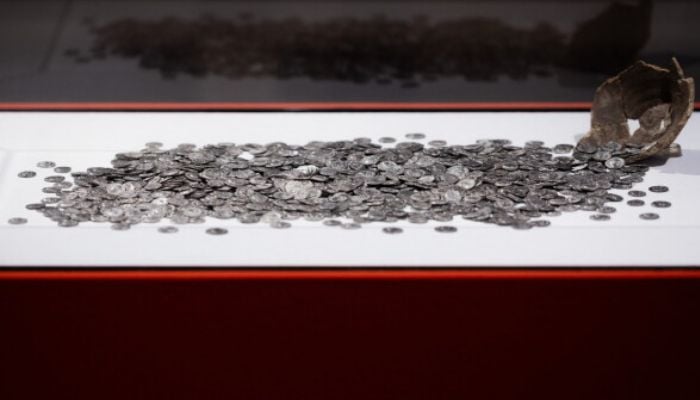
An amateur archaeologist has found Germany’s largest-ever hoard of Roman silver coins from the reign of Emperor Hadrian.
The officials announced Tuesday, September 22, that the hoard was discovered by Oliver Riedl, who scanned a field near Wesseling, south of Cologne, when his metal detector refused to stop beeping.
After unearthing the coins, he reported them to the authorities. The archaeologists who hurried to the spot were able to discover 934 silver denarii weighing 3.1 kilograms (6.8 pounds).
"It was obvious to me that there was something bigger lying beneath the surface," Riedl recalls, remembering how his detector was indicating this a year ago.
The hoard was put on display at LVR-Landesmuseum Bonn on Tuesday. Most of the coins belong to the reign of Flavian emperors (A.D. 69-96), but the oldest one dates back to 148 B.C., when Rome was still a republic.
“The hoard was certainly deposited intentionally sometime in the first quarter of the 2nd century A.D.,” Erich Classen, head of the Rhineland archaeology department, said.
Classen thought the owner must have passed away before retrieving it without being able to transfer information about its location.
In an effort to give context to the wealth involved, researcher Rahel Otte explained that one Roman soldier would earn 300 denarii per year, with half paid out in food and clothing—the total savings of six years' worth of income would be required by a soldier to gather such money. No one knows who did this.
The region of Cologne was under the rule of Rome between 39 B.C. and A.D. 459. The Romans set up a Rhine camp which was called Colonia Agrippina under the general Marcus Vipsanius Agrippa, who later founded Cologne.