NASA plans new telescope to hunt for water, worlds hidden from James Webb
PRIMA is expected to be launched in 2033
Published September 26, 2026
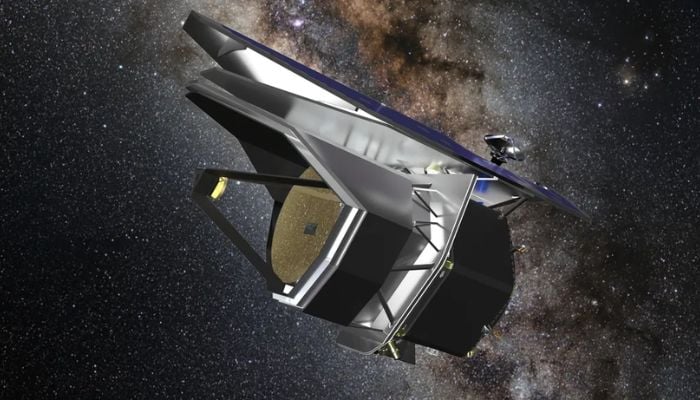
The National Aeronautics and Space Administration (NASA) has teased a new and more powerful telescope that could help humanity see parts of the universe that were even invisible with the American space agency’s James Webb Space Telescope.
NASA is now moving ahead with another space telescope called PRIMA, designed to look at wavelengths of infrared light that are largely beyond Webb's reach.
If everything goes to plan, it could launch in 2033.
PRIMA, short for Probe far-Infrared Mission for Astrophysics, will study the universe in far-infrared light using a 1.8-metre telescope.
That's important because some of the material astronomers want to study is cold and buried behind cosmic dust.
Webb mainly observes near- and mid-infrared wavelengths. PRIMA will go farther into the infrared spectrum, giving scientists access to signals they currently can't properly study from space.
One of the biggest questions involves water.
Scientists want to understand how water, carbon and oxygen move through the disks of gas and dust where planets are born and ultimately how worlds like Earth get the ingredients they need.
PRIMA will also look at how galaxies grew, how supermassive black holes evolved alongside them and how dust and heavy elements accumulated across billions of years.
It won't replace Webb. The two telescopes are designed to look at different parts of the same universe, with PRIMA filling a gap between telescopes such as Webb and radio observatories.
James Webb cost around $10 billion before launch. If PRIMA clears its remaining reviews, NASA says its project cost will be capped at $1.2 billion, excluding launch and other non-project expenses.
NASA has now moved PRIMA into preliminary design and technology development. So there is still a long way to go before it reaches space.
But if it launches in 2033, astronomers will finally get a look at a part of the infrared universe that even Webb can't properly see.