UK edges closer to reversing Brexit: But how difficult would rejoining EU be?
Every EU member state would have to approve Britain's return
Published September 28, 2026
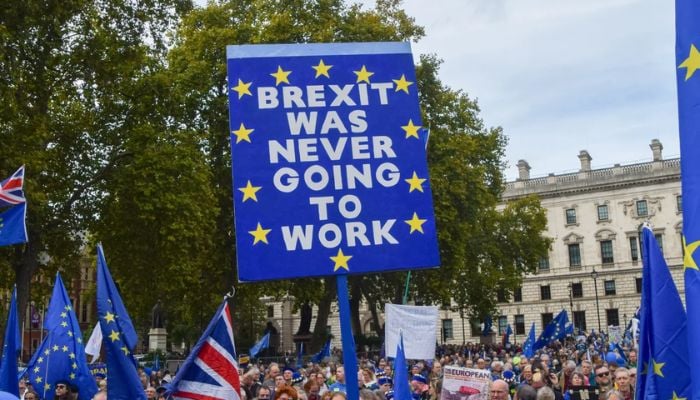
The United Kingdom spent years negotiating its way out of the European Union (EU) and eventually got out on January 31, 2020; however, just six years later the country is likely to reverse Brexit and rejoin the Union.
UK Prime Minister Andy Burnham has refused to rule out the possibility of putting the proposal on his party’s manifesto for the next elections; while senior Labour Party leaders are also openly discussing the possibility of rejoining the EU.
At the Labour Conference on Monday, September 20, 2026, the Foreign Secretary Ed Miliband said Britain's future lies in a “stronger and deeper” partnership with Europe.
But reversing Brexit wouldn't be as simple as cancelling the decision made in 2016.
Britain is now considered a country outside the EU and would have to apply for membership again under Article 49 of the EU treaty.
That means going through an accession process and proving it can meet the bloc's political, economic and legal requirements.
Then comes perhaps the bigger hurdle.
Every EU member state would have to approve Britain's return. The European Parliament would also need to give its consent and a final accession agreement would require ratification.
Britain could also find that the membership it left behind isn't the membership it would get back.
Before Brexit, the UK enjoyed several special arrangements, including an opt-out from the euro, exclusion from much of the Schengen border-free system and a rebate on its contribution to the EU budget.
Those privileges wouldn't automatically return and any new exemptions would have to be negotiated and other EU countries would have a say.