Drought by design? How England's water structure failed to keep pace with its climate
Severe drought declared across Southern England as reservoirs plunge to critical levels
Published October 15, 2026
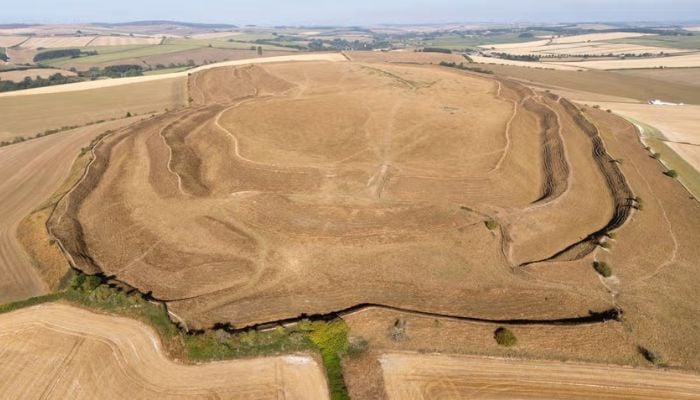
England’s southern counties have entered severe drought after the driest April to September in over a century. The immediate cause is a summer of record heat and almost no rain. The deeper story, however, is a system with thin margins, a rainfall dependency it can no longer afford, and a recovery that may take longer than the weather alone suggests.
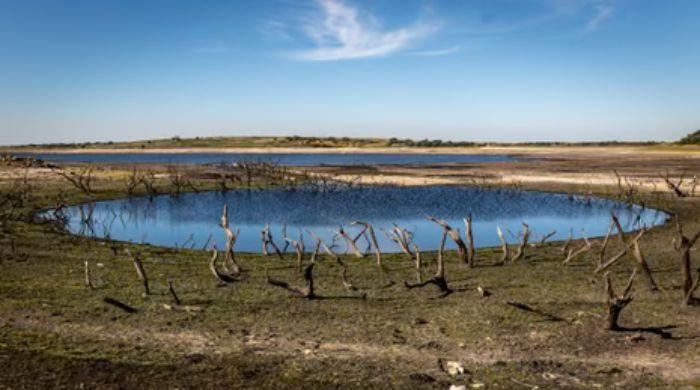
On paper, this shouldn’t have happened. Heavy rain in late 2025 and early 2026 had refilled England’s water stores, and in the spring the system looked healthy. Six months later, Wimbleball Reservoir on Exmoor is about 16% full, Ardingly in West Sussex is near 19%, and the Environment Agency has declared severe drought across parts of Cornwall, Devon, Dorset, Somerset, East Sussex, and West Sussex. The agency would expect storage of about 75% at this point in the year.
Persistent high pressure settled over the country in June and barely moved. Sky News analysis of Met Office data found that stations across the affected counties received almost 40% less rain than normal between April and September. The average of 232mm beat the previous record low of 239mm, set in 1976.
The extremes were stark. Between 15 June and 15 August, Hurn weather station near Bournemouth recorded 1.4mm of rain, about 1% of its usual total for those weeks. England and Wales had their driest July since records began in 1836, and the south-east received roughly 1% of its expected July rainfall. Locations in Devon and Hampshire went 50 and 49 consecutive days without measurable rain.
Heat compounded the shortage. The Met Office reports an average daily maximum of 21.3°C this year, beating the 21°C record set in 1976, and 34 days reached 30°C or above somewhere in England. Hot air pulls more water from reservoirs and soils, so every dry day costs more than it would in a cooler year.
A pattern, not an accident
If 2026 were a one-off, it would be easier to call it bad luck. It is not. England has now had droughts in 2022, 2025, and 2026, three in five years. Droughts in the UK have historically arrived every five to ten years, which means the gap is narrowing. The Met Office says heat extremes are becoming more likely and more intense due to human-caused climate change, and that the summers of 2022 and 2026 are indicative of England’s future climate.
The planners had warnings. The Environment Agency projected that under population growth and climate change, England’s demand for water would exceed supply around 2045. Emma Pinchbeck, chief executive of the Climate Change Committee, said in August that the UK is “not prepared at all” for prolonged dry weather. Her warning covered infrastructure, farming, and large parts of the economy, not just water companies.
Where the structure shows its limits
Several features of the system look less like a natural disaster and more like an outdated design. The government’s answer to the storage problem is nine new reservoirs by 2050, along with planning changes to make them easier to build. That is an admission that current capacity isn’t enough, and a timetable of decades set against droughts that now return within years.
In the meantime, the response is already visible in smaller adjustments: regulators have let South East Water release three million litres a day less from Ardingly into the River Ouse, and South West Water nine million litres a day less from Ardingly into the River Exe. These are stopgaps, and each one shifts the cost to rivers.
On investment, ministers say they are putting £104 billion into upgrading water infrastructure. The scale of the figure confirms how large the backlog was. The House of Commons library notes that campaigners have argued that the industry’s poor environmental performance and high accrued debt strengthen the case for public ownership, while the government’s Water Bill takes a different route of tighter public control over private companies. Which model serves customers better is contested, but all sides agree the current arrangement didn’t deliver resilience in time.
Farming faces its own pressures. The National Farmers’ Union president, Tom Bradshaw, has called yields “very, very poor” and has long argued for more on-farm reservoirs and irrigation. Farming and public supply draw on the same stretched sources, and neither was equipped for a summer like this.
So drought by design?
The phrase invites a fair objection. Nobody designed a drought, and no policy summoned the high pressure that sat over England this summer. The claim in its true form highlights a deeper issue: a water system planned around the climate of previous decades, with limited storage and years of underinvestment by the government’s own account, has met a hotter, drier summer and found that its margins were smaller than assumed. The National Drought Group’s September meeting found that the ending drought would require rainfall at around 120% of normal over the next seven months.