Google's AI glasses: Comprehensive guide to specs, partners, display models
Google is set to launch its AI glasses in 2026
Published December 09, 2025
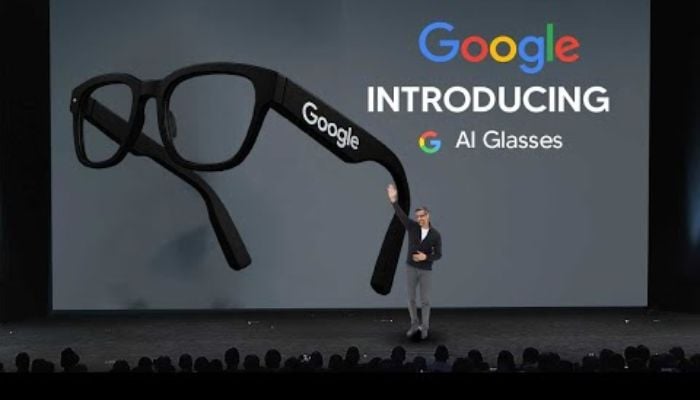
Google has announced that it is set to launch its first AI-powered smart glasses in 2026.
The move sets the stage for a direct competitor of Meta, the current leader in consumer AI eyewear.
The Alphabet-owned tech giant revealed a dual-prolonged hardware strategy developed in partnership with different eyewear brands.
As described in the company's blog post at The Android Show | XR Edition, Google is developing two different categories of smart glasses i.e., Audio-Only AI glasses and Display AI glasses.
- Audio-Only AI glasses: Designed for screen-free assistance, these glasses will include speakers and microphones enabling users to interact conversationally with Google’s Gemini AI assistant for tasks such as information lookup, translation, and media control without any visual display.
- Display AI glasses: Such glasses will feature a lightweight, in-lens display enabling personalised information like turn-by-turn navigation, live translation captions, message previews, and contextual data about their surroundings.
Google announced that the first models will arrive sometime in 2026 but has not revealed which models will debut first.
The AI glasses will be built on Google’s Android XR operating system, the same platform powering Samsung’s recently launched Galaxy XR headset.
On contrary to the designing glasses solo, Google is collaborating with established names in eyewear and tech for hardware design and distribution:
- Warby Parker (company confirmed in Monday filing that its first glasses co-developed with Google are slated for a 2026 launch, describing them as lightweight and AI enabled).
- Gentle Monster (design partner)
- Samsung (hardware collaborator)
- Xreal (Google is working with Xreal on a separate device codenamed Project Aura and described as wired XR glass).
In addition to the hardware, Google announced major software updates coming to the Android XR platform which is anticipated to be the “Android equivalent” for face worn computers.