Iran's military capabilities in 2025: Detailed assessment of missiles, drones, naval power
GFP index labels Iran as a top 20 global military power
Published December 29, 2025
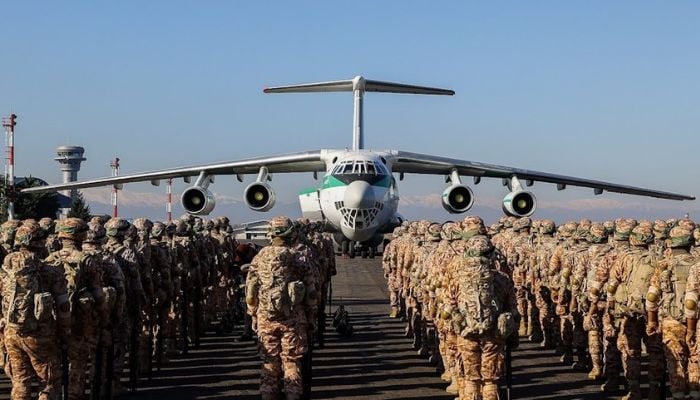
Iran has always been a center of attention for global powers due to its offensive military approach. In 2025, Iran was engaged in a war and several maritime and proxy-related incidents.
The most significant military engagement was the Iran-Israel War. In this 12-day direct conflict, Iran launched hundreds of ballistic missiles and drones under “Operation True Promise III.”
Recently, Iranian President Masoud Pezeshkian warned that his country faces a “full-fledged war” with the United States, Israel, and European powers.
Speaking on the official forum of Supreme Leader Ayatollah Ali Khamenei, Pezeshkian said, “In my opinion, we are in a full-fledged war with America, Israel, and Europe. They do not want our country to stand on its feet.”
These remarks highlight that Iran is once again surrounded by military tensions. But will its military capabilities be enough to sustain its sovereignty in such a tense environment?
Here’s a look at Iran’s military capabilities acquired in 2025 to help understand whether it is equipped to position itself strongly on the global stage.
Ballistic and cruise missiles
At the heart of Iran’s strategic arsenal are its ballistic and cruise missiles, which serve both deterrence and retaliation roles.
Iranian forces continue to conduct missile tests and drills, indicating resilience and modernization despite losses in June 2025.
As reported by New York Post, Iran conducted fresh ballistic tests months after the June conflict with launches reported near Tehran, Isfahan, and Mashhad.
In May 2025, Iran unveiled the Qassem Bassir. It is a new medium-range ballistic missile with a range of roughly 1,200 km and an advanced guidance system.
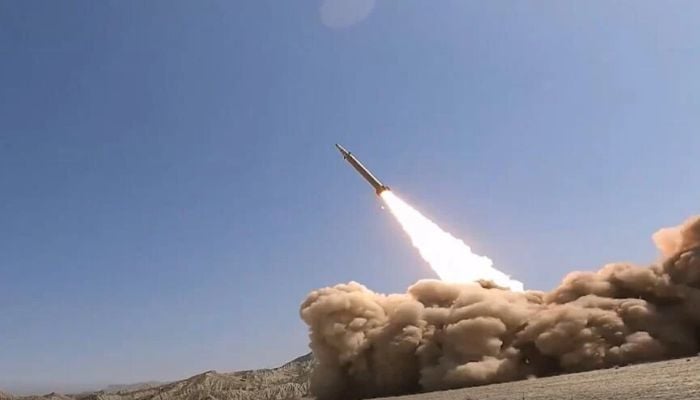
During late-year naval drill “Eghtedar (Power)”, the commander of the Islamic Revolutionary Guard Corps (IRGC) Navy announced the use of long-range missiles with ranges exceeding the length of Persian Gulf. With over 989 km range, the missiles demonstrate both coastal defense and regional strike potential, reports Tehran Times.
Iranian naval commanders also assert development plans for supersonic cruise missiles with ranges up to 2,000 km, improving maritime strike and anti-access area-denial (A2/AD) capabilities.
Drones
Iran’s unmanned aerial vehicle (UAV) programs have expanded rapidly. It focuses on both high-end strike capabilities and large-scale proliferation.
In January 2025, the Iranian Army inducted 1,000 advanced drones into service, including strategic, stealth, and anti-fortification models having ranges beyond 2,000km, reports Reuters. They also have lower visibility and significant payload capacities.
Another separate military drills in 2025 highlights Iran’s several new drone types, including short-range reconnaissance UAVs to Kamikaze. It also showcases several multi-platforms capable of anti-armor and reconnaissance missions.
Long-endurance models like Qods Mohajer 10 remain central to Iran’s strike doctrine, flying up to 2,000 km with a 24-hour mission profile and carrying a mix of guided munitions.
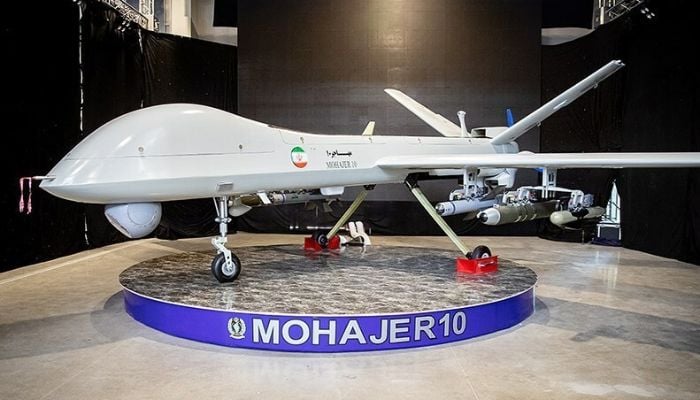
These approaches highlight that in 2025, Iran focused on the strategy of asymmetric aerial lethality, enabling persistent surveillance and strike capability over much of the Middle East and beyond.
Naval Power and Maritime Strategy
With or without any escalated military tensions, Iran needs to maintain an advanced maritime strategy and efficient naval power due to the “Strait of Hormuz.”
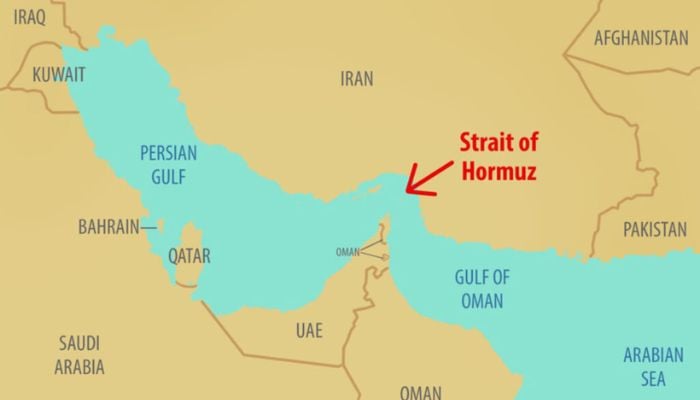
The Strait is a narrow waterway that is one of the most strategically vital maritime corridors in the world. In late 2025, the IRGC intensified its presence and operational activity along the Strait, conducting large-scale naval drills.
Iran’s naval capabilities focus on asymmetric sea control with missile boats, drone carriers, and cruise missiles at the forefront.
The IRIS Shahid Bagheri, commissioned in early 2025, showcases Tehran’s first drone-carrier vessel, capable of deploying UAVs, helicopters, and anti-ship missiles hundreds of miles from ports.
This year’s naval drill also involved simultaneous ballistic and cruise missile firings in the Persian Gulf and Gulf of Oman, in addition to striking simulated enemy bases, highlighting integrated strike concepts at sea.
Iran’s naval capabilities are also adequate to control and seize the chokepoint completely. Beyond exercises, recent incidents highlight Iran’s active role in enforcing its maritime security claims.
In December 2025, the IRCG seized a Marshall Islands-flagged oil tanker near the Strait, detaining its crew and moving the vessel into Iranian waters under the pretext of a counter-smuggling operation, AP reports.
Outlook
Moving into 2026, Iran’s defenses are expected to focus on missile modernization, UAV proliferation, and maritime deterrence strengthened by a strategic partnership, notably with Russia in space and defense sectors. Simultaneously, Tehran’s intent is to resist external pressure and underscore its relevance in regional power balances.