World's oldest, largest iceberg 'A23a' finally disintegrates after 40 years at sea
The 'queen of icebergs' remained stuck in the ocean for most of its life
Published January 14, 2026
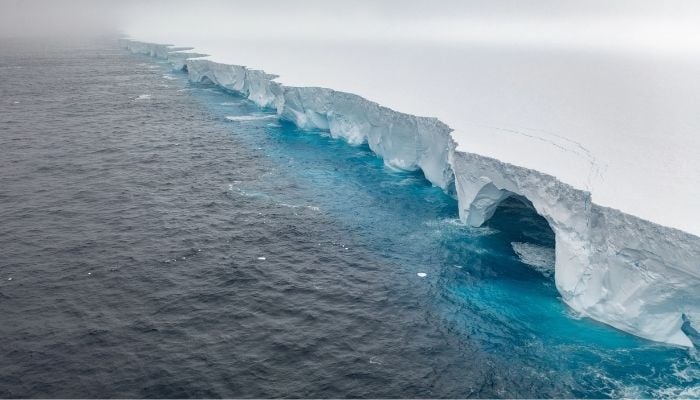
The world's largest iceberg, A23a, has finally met its end after nearly 40 years at sea. New satellite images reveal that the mega iceberg has dissolved and turned into a blob of “blue mush”.
According to Live Science, the iceberg was one of the oldest bergs on record and until recently, it reached a size three times larger than the New York City (NYC).
It broke off from Antarctica's Filchner-Ronne Ice Sheet in the summer of 1986 and spent nearly 40 years at sea. The megaberg also known as “queen of icebergs” remained stuck in the ocean for most of its life.
At first, its submerged bottom caught on the seafloor and it remained trapped for nearly 34 years, until 2020.
After breaking free, it drifted away from Antarctica; however, the freedom was short-lived as it became trapped again in a massive ocean current, causing it to spin in the same location for months.
In December 2024, A23a broke free and made a beeline for the island of South Georgia.
This move sparked fears that its grounding on the edge of the island might prove catastrophic for the island's resident penguins.
However, the potential catastrophe was averted after the megaberg started breaking down in May 2025 and drifted into the warmer waters of South Atlantic Ocean.
Now, the latest images taken by the National Aeronautics and Space Administration’s (NASA) Terra telescope on December 26, 2025, revealed that the megaberg has lost nearly two-third of its mass, signalling imminent demise.
The images showed A23a surrounded by hundreds of smaller icebergs that have broken off its edges.