Trump's face on commemorative $1 coin: Proposal sparks debate
Trump's face on commemorative $1 coin: Proposal sparks debate
Published January 28, 2026
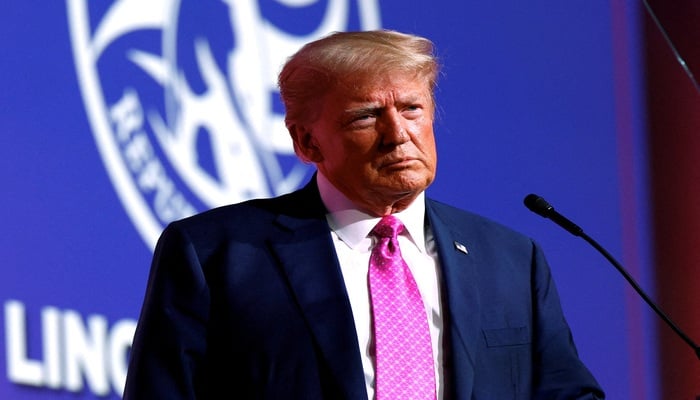
The United States' political landscape is witnessing a turmoul as the Treasury Department considers engraving President Donald Trump's face on a $1 coin to commemorate the 250th anniversary of the Declaration of Independence.
The move involving Trump's face on a $1 coin has drawn immense criticism from Congressional Democrats, arguing that honouring a living president on currency undermines the historical significance and integrity of American coinage.
U.S. coins have historically adhered to a tradition established by George Washington, who refused to be depicted while he was alive, viewing it as a “monarchical” gesture.
Those criticising the Trump coin contended that the decision to replace previously planned quarters honouring abolitionists, suffragettes, and civil rights leaders with images of early White pioneers and revolutionaries is an inappropriate departure from a more inclusive representation of American history.
Citing a letter, USA TODAY reported that five Democratic senators, along with independent Senator Angus King, called on Treasury Secretary Scott Bessent to abandon the Trump coin initiative and reconsider the commemorative quarters honouring prominent figures who played a vital role in American history.
They warned that placing a living president’s likeness on a coin would contradict the nation’s values.
Notwithstanding the backlash, a representative from the U.S. Mint asserted that the proposed coin is in compliance with legal standards. The development unfolded after a January 22 meeting of the Commission of Fine Arts, which recommended a side profile of Trump, pending his approval.
Legal questions remain, as some lawmakers cite an 1886 law specifying that only deceased individuals may be featured on U.S. currency.
While the American Numismatic Association admitted that Calvin Coolidge appeared on a coin during his presidency, the impending production of a Trump coin is stirring a debate and reflecting broader discussions about national identity and the symbols of honour.