Wall Street, Nasdaq tech stocks take nosedive, nearly $1 trillion lost in selloff: What caused it?
Latest downtrend on Wall Street was caused by a new legal tool from Anthropic's Claude LLM
Published February 05, 2026
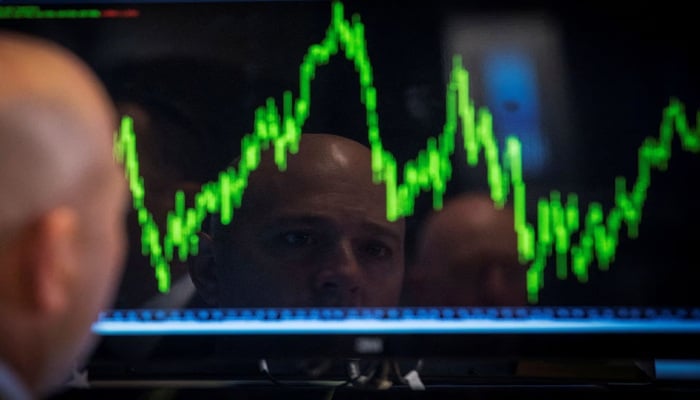
Artificial intelligence (AI) may or may not replace humans, but its rapid rise has many worried, and it appears to have been so much feared on Wall Street that it ended up wiping around a $1 trillion from tech stocks, a big portion of which was made up of software and IT services.
Not only was the recent plunge of tech stocks on Nasdaq and Wall Street driven by concerns around AI, but the declining demand for microchips also had a fair contribution.
Role of Anthropic's Claude in tech stock decline
The latest downtrend on Wall Street was caused by a new legal tool from Anthropic's Claude large language model (LLM), which underscores the purportedly needless expansion of AI into lucrative enterprise sectors.
The Nasdaq Composite saw approximately $800 billion (£586 billion) wiped off its value on Tuesday after it plummeted nearly 2.5% at its lowest point before closing down 1.5%.
This led investors to question whether this enormous selloff in global software stocks was excessive, particularly in the wake of growing fear regarding AI's potential to disrupt established businesses.
Which tech stocks dropped the most on Wall Street and Nasdaq?
The S&P 500 software and services index fell nearly 4% on Tuesday and further 0.73% on Wednesday, which was its sixth consecutive session of losses that eroded about $830 billion in market value since January 28.
The past few days observed a series of slumps in companies like Thomson Reuters, which dropped nearly 16% on Tuesday, and the London Stock Exchange, which registered a 13% drop. The S&P 500 software and services index on Wednesday was trading 26% down from its October peak.
The shocking development led analysts to warn of the detrimental and disruptive effects of these AI advancements on industries ranging from finance to law, while their success in spaces for which they're meant remains uncertain.
Despite these mind-boggling upheavals, some analysts are of the view that AI fears are exaggerated, stating that software remains essential and cannot be easily replaced. In the same manner, Nvidia CEO Jensen Huang argued in favour of software's existence, dismissing concerns that AI would replace software as "illogical," suggesting that the industry will adapt to these advancements.
As investors in the unsettled Wall Street navigate this AI-driven chaos, its further impact on the tech industry has been unforeseen so far, meaning investors must proceed with caution and adaptation.