Interstellar Comet 3I/ATLAS packed with surprising amount of alcohol, ALMA reveals
Methanol abundance in Comet 3I/ATLAS surprises scientists
Published March 10, 2026
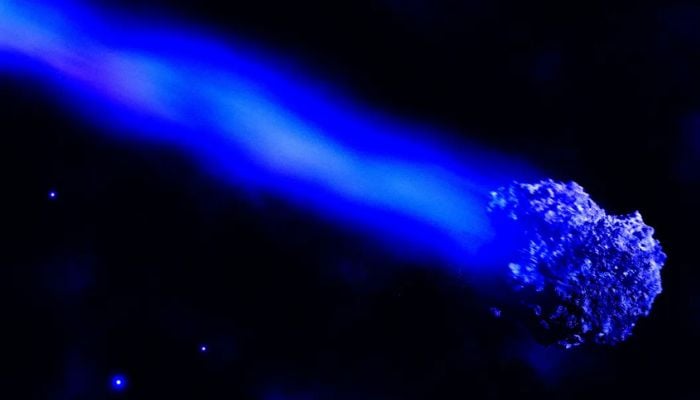
Astronomers using the Atacama Large Millimetre/ submillimetre Array (ALMA) in Chile have found that interstellar comet 3I/ATLAS contains unusually intense levels of methanol, which is a type of alcohol, along with hydrogen cyanide, providing new clues about the composition of planetary systems.
The comet, which marks the third confirmed interstellar object ever detected, was observed in late 2025 as it approached the Sun.
Due to the heat of the Sun, its icy surface releases gases and dust, forming a glowing halo, or coma, around its core.
Upon further investigation, the researchers found the chemical composition of the comet.
The ALMA data revealed methanol-to-hydrogen cyanide ratios of around 70 and 120 across two observation dates, placing 3I/ATLAS among the most methanol-rich comets ever studied.
Usually, the comets are enriched with hydrogen cyanide, a nitrogen-bearing molecule. However, the high levels of methanol in 3I/ATLAS suggest that the icy material is formed under very different conditions than typical solar system comets.
By examining the telescope’s high-resolution, it is found that the hydrogen cyanide appears to be released directly from the comet’s nucleus, consistent with solar system comets.
While such behaviour is commonly observed in solar system comets, this marks the first time scientists have traced such detailed outgassing physics in an interstellar object.
Earlier, the chemical composition of 3I/ATLAS was dominated by carbon dioxide as found in the James Webb Space Telescope when farther from the Sun. This adds another unusual detail to its chemical profile.