Black rain in Iran: Which other countries are at risk?
Black rain reached Western Pakistan as winds carried Iranian oil fire pollutants
Published March 10, 2026
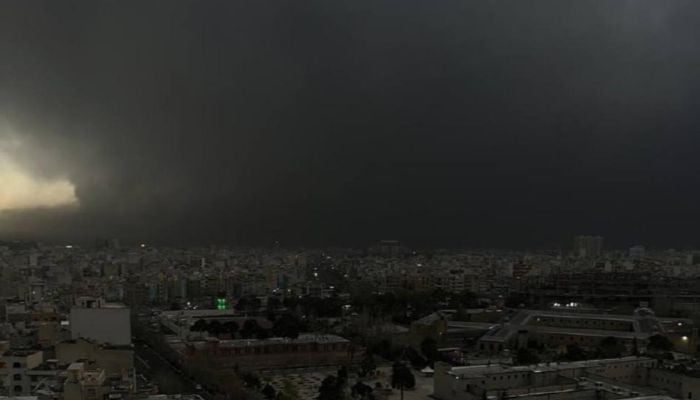
Residents of Iran are advised to stay cautious as the UN health agency has received multiple reports of oil-laden rain this week.
The precipitation contaminated with soot, oil, and toxic chemicals is about to fall in major cities of Iran, as Tehran choked in black smoke on Monday, March 09, following an attack on an oil refinery.
The attack was part of an escalation in strikes on Iran’s domestic energy supplies as part of the U.S.-Israeli campaign.
Since February 28, strikes have hit at least four oil facilities around Tehran, including the Shahran depot in the northwest and the Tehran oil refinery in the southeast.
As shown in satellite images from March 9, both sites are still burning.
Regions currently affected
Currently, the high-risk areas include:
- Tehran and surroundings: The highly affected areas are in Iran’s capital, risking nearly 10 million people. As reported by the BBC, residents in areas including Tajrish reported thick black smoke blotting out the sun and a persistent burning smell.
- Karaj: The oil depot in Karaj, west of Tehran, has also been affected by strikes, contributing to the pollution plume.
Potential spread
- Western Pakistan (Baluchistan): Weather models suggest that westerly winds can carry pollutants and toxic rainfall toward Pakistan’s western border region.
- Northern Iran and Caspian Region: Smoke and contaminants are pushing northward towards the Caspian Sea due to wind patterns.
- Long-range transport: Fine particles and soot could travel thousands of kilometres, with models suggesting potential reach to the Altai Mountains in Siberia.
How is black rain formed?
Black rain occurs due to the incomplete combustion of oil because of insufficient oxygen. The rain is composed of toxic chemicals, including carbon monoxide, soot particles, sulphur and nitrogen oxides, hydrocarbons, and metallic compounds.
These pollutants can dissolve in rainwater, forming acidic or oil-contaminated “black rain.”
Geography worsens the effect as Tehran sits in a basin surrounded by mountains that can further trap pollutants. Winter temperature inversions may also keep toxic air close to the ground.
The World Health Organisation (WHO) warns that attacks on oil facilities also risk “contaminating food, water, and air,” with severe adverse impacts, especially for children, the elderly, and those with pre-existing health conditions.