Is Tessori MQM-P's last governor?
While Nehal Hashmi’s appointment may ease political tension between PPP and PML-N, it is certainly a test for MQM-P on how they stage a comeback
Published March 13, 2026
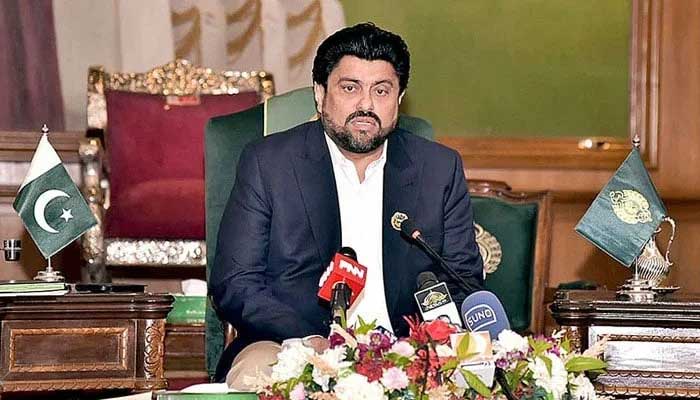
The exit of Muttahida Qaumi Movement-Pakistan (MQM-P)-backed Kamran Tessori from the Sindh Governor’s House on Thursday, in an unceremonious manner, almost mirrors the 2016 departure of his party colleague Dr Ishratul Ibad, who still holds the record as the longest-serving governor, having held office from October 2002 to November 2016. It may be a coincidence that in both cases they were replaced by Pakistan Muslim League-Nawaz (PML-N)-backed candidates — first the late former chief justice Saeeduzzaman Siddiqi, and now Nehal Hashmi. While politics is a game of possibilities, it appears that the MQM-P may no longer be able to reclaim the position it once held, and Tessori could well turn out to be its last governor.
Nehal Hashmi, a lawyer by profession, is a veteran PML-N leader from Karachi and is known as a staunch loyalist of former prime minister Nawaz Sharif. At one point, he even put his political career at risk when he spoke bluntly against the then chief justice of Pakistan, Justice Saqib Nisar, to demonstrate his loyalty to Mian Sahib, a stance that ultimately led to punishment. Hashmi had also taken a strong position against the MQM-P during the party’s peak years and faced death threats as a result. However, in the present political set-up — where the PML-N and the Pakistan Peoples Party (PPP) maintain relatively cordial relations despite occasional differences — Hashmi now has an opportunity to establish his credentials by taking all sides, including the MQM-P, into confidence. Can he do that? Only time can tell. Those who know him have cautioned him to keep control of his temperament.
Tessori linked his removal with the recently held conference, “Karachi Bachao”, which even PPP leaders also endorsed and believe the governor himself was responsible for his fate as he had crossed certain ‘red-lines’ and created disaffection among the people in Sindh. “Yes, we strongly reacted to speeches made in the conference and by him and the Sindh Assembly not only passed the resolution but informed the Centre at the highest level.”
Tessori’s exit is as dramatic as his entry into the Governor’s House in October 2022, as he remains quite controversial during the MQM-P’s infighting after post-August 22, 2016, and it actually led to further split and the party was divided between the MQM-P (Bahadurabad) and the MQM-P (PIB Colony), with Tessori siding with the PIB group, which was led by veteran MQM-P leader Dr Farooq Sattar. Finally, with the interference of those who matter, Tessori was accepted by both the MQM-P factions.
Dr Sattar did not even wait for the party's official position, and his immediate reaction to Tessori's sacking clearly showed that he was not sure what position the party would take. As for Tessori, it will be interesting to see his future role in politics. Will he be acceptable in the MQM-P’s fold or not as a central leader, and in what position? If so, after a break, one has to wait and see.
However, sources said, the MQM-P apparently is in a fix whether to take an extreme position like withdrawing support to the PML-N or, as a mark of protest, withdraw its two ministers. What can the federal government offer to satisfy its coalition in return? Maybe another ministry and adviser.
The decision to sack Tessori was certainly a severe blow to the MQM-P, which in the last four years used the tag of governor and the Governor’s House in its politics, but its relationship with the PPP in the last one year in particular deteriorated, reaching its peak when the MQM-P reiterated its demand for special status to Karachi. The MQM-P claimed that the prime minister’s decision is a violation of the PML-N-MQM-P accord, according to which the party’s nominee would be appointed as governor.
Facts remain that the MQM-P as a party could not stage a comeback since the post-2013 elections, which the united MQM-P won except on two seats, but its founder Altaf Hussain’s reactions against some of the party leaders led to quarrels between party leaders and workers at once its headquarters, 90, Azizabad, which in fact was the beginning of the party’s split. Three years later, in March 2016, some of MQM-P leaders, Syed Mustafa Kamal, Anis Kaimkhani and a bunch of others formed their own group called the PSP — Pak Sarzameen Party. However, soon, some of those who joined the PSP quit the party.
However, the final blow to the MQM-P was caused by none other than the party founder himself when Altaf Hussain made a controversial speech on 22nd August 2016 outside the Karachi Press Club and, in the end, raised some anti-Pakistan slogans. What followed next is now history, but the party faced one of the worst crackdown operations since the 1992 operation, and it resulted in a split between the MQM-Pakistan and MQM-London.
Ishratul Ibad, who at that time was the Sindh governor, tried to fence the difference but in between he faced the onslaught from PSP’s Mustafa Kamal and he reacted in a similar manner, which many believe was his biggest mistake as he was later forced to resign, making way for the then-prime minister, Nawaz Sharif, who appointed former chief justice Saeeduzzaman Siddiqui as governor.
In the post-2018 elections, when the Pakistan Tehreek-e-Insaf (PTI) came into power, then-prime minister Imran Khan brought his own party man, Imran Ismail, as governor, who, years later, was replaced by Kamran Tessori.
Though under the 1973 Constitution, the position of the president is that of a constitutional head and more symbolic, while the governor only represents the federation in the province, both positions have been politicised since 1977 and have often been used for political purposes.
However, in Sindh’s context in particular, it is seen as keeping a balance between rural and urban Sindh, with the chief minister coming from rural Sindh, the governor often representing urban Sindh. The province in the recent past, especially after 1988, had seen non-controversial governors like retired Justice Fakhruddin G Ebrahim and Hakeem Saeed. The PML-N in the past has also appointed its party leaders, like Syed Mamnoon Hussain and Muhammad Zubair, as governors prior to Nehal Hashmi.
While Hashmi’s appointment may ease political tension between the PPP and PML-N, it is certainly a test for the MQM-P on how they stage a comeback. Apparently, they are certainly down but not yet out. But, for how long?
The writer is a journalist and columnist for GEO, The News and Jang.
X:@MazharAbbasGEO