In meeting with Chinese envoy, PM highlights Pakistan's de-escalation role amid Mideast tensions
Premier Shehbaz reaffirms CPEC 2.0 push, Beijing backs Islamabad’s economic reforms and stability efforts
Published March 26, 2026
- China reiterates support for trade, economic cooperation.
- PM Shehbaz appreciates China’s continued economic support.
- Engagements planned for 75th diplomatic anniversary celebrations.
ISLAMABAD: Prime Minister Shehbaz Sharif on Thursday highlighted Pakistan’s constructive role in promoting de-escalation and regional stability amid reported efforts to open a window for diplomacy to end the nearly month-long war between the US, Israel, and Iran, which affected the broader Middle East.
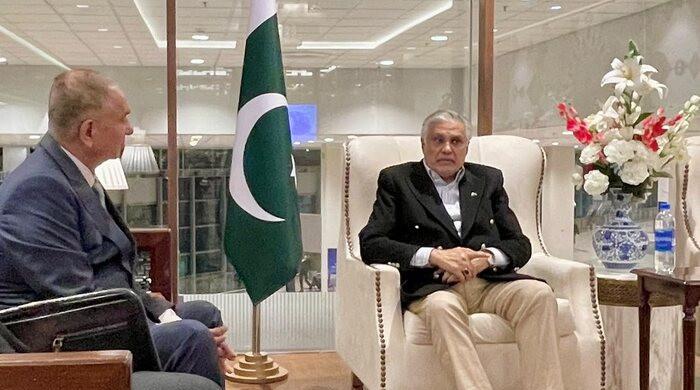
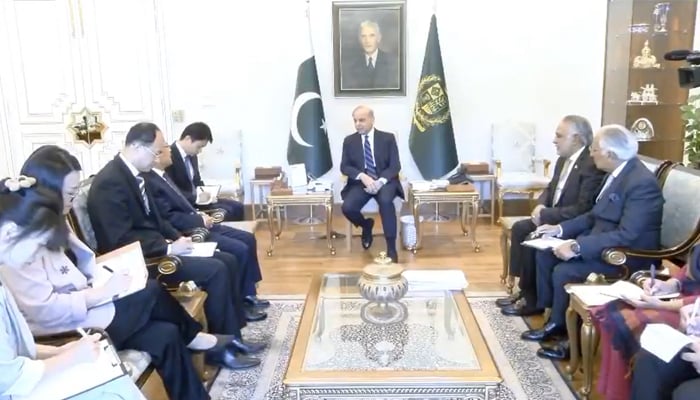
He made these remarks during a meeting with Chinese Ambassador Jiang Zaidong, who, along with a delegation, called on him at the Prime Minister's House in Islamabad, according to a statement issued by the Prime Minister's office.
The development comes days after reports suggested that Pakistan is positioning itself as a key mediator to help broker an end to the US-Israel war against Iran through active back-channel diplomacy.
The risk of a prolonged war in Iran spilling over into Pakistan is among Islamabad's biggest fears, analysts and security officials say. Pakistan, which has been engaged in a conflict with the Afghan Taliban, has also suffered from fuel disruptions caused by the Iran war, which was launched by the US-Israel on February 28.
According to international media reports, Chief of Army Staff and Chief of Defence Forces Field Marshal Asim Munir recently held a telephonic conversation with US President Donald Trump, with the White House also confirming the contact. Senior Pakistani officials have reportedly been facilitating communication between Tehran and key US interlocutors, including Steve Witkoff and Jared Kushner.
Over the past 72 hours, Pakistan, in coordination with Turkiye and Egypt, has played a pivotal role in relaying messages between Washington and Tehran to prevent further escalation.
Reports also suggest that Islamabad is being considered as a potential venue for a high-level meeting between the United States and Iran later this week, with US Vice President JD Vance expected to attend if the proposal materialises.
PM Shehbaz has also publicly stated Pakistan’s willingness to host talks aimed at resolving the conflict, as diplomatic momentum builds following a shift in Washington’s stance amid concerns from Gulf allies over potential escalation.
During the meeting at the Prime Minister’s House, Premier Shehbaz congratulated the Chinese leadership on the successful conclusion of the “Two Sessions” and thanked President Xi Jinping, Premier Li Qiang and Foreign Minister Wang Yi for their warm Pakistan Day greetings.
Appreciating China’s continued economic support, he reaffirmed Pakistan’s commitment to advancing the second phase of the China-Pakistan Economic Corridor (CPEC 2.0), with a focus on agriculture, industrial cooperation and priority infrastructure projects.
Ambassador Jiang commended Pakistan’s economic resilience and ongoing reform efforts, reiterating Beijing’s continued support, particularly in the areas of trade and investment.
Both sides expressed satisfaction over ongoing engagements and looked forward to high-level exchanges to mark the 75th anniversary of diplomatic relations between the two countries.
The prime minister also underscored the importance of close coordination at all levels on issues of mutual interest, reaffirming the enduring Pakistan-China All-Weather Strategic Cooperative Partnership.