Artemis II crew prepares for homecoming as countdown to splashdown begins
The Orion capsule will fall over 400,000 feet (121 kilometers) and travel almost 2,000 miles (3,218 kilometers) over the Pacific Ocean to splashdown
Published April 10, 2026
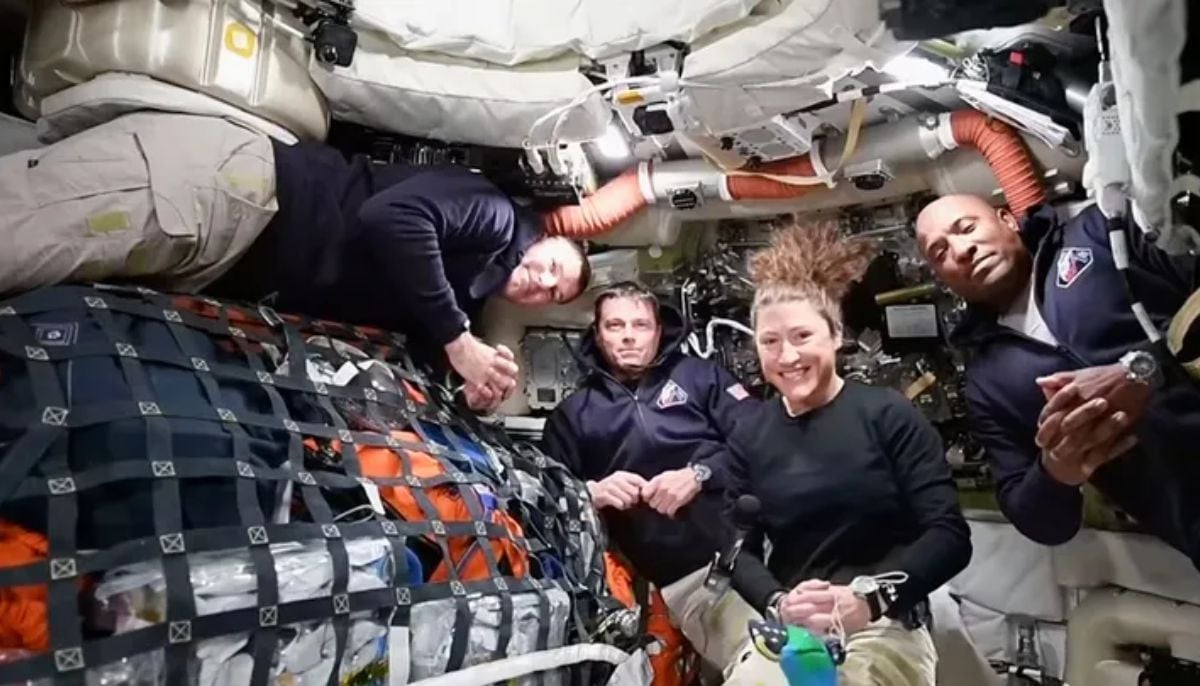
Artemis II’s homecoming is what everyone is buzzing about as the countdown is underway.
Bon voyage, Artemis II! From the electrifying Florida launch to a moon flyby to a splashdown off the coast of San Diego, it is what is keeping everyone on edge.
Artemis II countdown to the splashdown is officially underway.
NASA’s four astronauts are onboard the Orion spacecraft heading back to home Earth with a splashdown expected off the coast of California at about 8:07 p.m. EDT (5:07 p.m. PDT) on Friday night, April 10, 2026.
Artemis II moon mission completed a moon flyby earlier this week, reaching the far side of the moon since Apollo 13 in 1972.
Artemis II was launched on April 1 from Kennedy Space Center in Cape Canaveral, sending four astronauts on a 10-day voyage orbiting the moon.
At the time of writing, the Orion capsule carrying four astronauts onboard the Orion spacecraft is 80,673 miles away from Earth.
How will Artemis II crew perform the re-entry?
Here’s your go-to guide to understand the Artemis II splashdown.
On the last day in space, Artemis II crew are set to head back to Earth while making last-minute checks for re-entry and splashdown protocols.
As per NASA officials, "The third return trajectory correction burn is scheduled for Friday afternoon, on April 10, at about 1:53 p.m. EDT ahead of re-entry procedures."
The Orion capsule crew is using a ‘slingshot’ technique to re-enter the Earth’s atmosphere, negating the need for propulsion or much fuel.
About 20 minutes before the re-entry, the service module of the Orion capsule will be separated, never to return to Earth along with the crew, burning in the atmosphere.
There will be a critical 13-minute window in which the Orion spacecraft will re-enter the Earth’s atmosphere.
The splashdown will hardly last for 13 minutes.
The Orion capsule will fall over 400,000 feet (121 kilometers) and travel almost 2,000 miles (3,218 kilometers) over the Pacific Ocean to the splashdown site off the coast of California.
For this entire time, Artemis II will no longer remain in contact with Houston, enduring the temperatures of up to 2,760 degrees Celsius.
Once Orion blazes through Earth’s atmosphere, as best described by astronaut Victor Glover, like ‘riding a fireball through the atmosphere," the Avcoat protective shield will set free the parachutes to deploy.
The parachutes then slow the vehicle down.
What comes next is the “splashdown” off the coast of San Diego, after which five orange airbags will inflate around the top of Orion, flipping the capsule to an upright angle.
After landing, the Artemis II crew will be rescued by a U.S. Navy recovery vessel within about two hours.