Trump vs Pope Leo XIV: Explosive feud escalates as president calls pontiff 'weak'
Pope Leo clarified that his words were not intended as attacks on anyone
Published April 19, 2026
The relationship between the United States (U.S.) President Donald Trump and the leader of the Catholic Church Pope Leo XIV have deteriorated into one of the most public clashes between an American president and a sitting pope in modern history.
It started with a difference over the Trump administration’s crackdown against immigration; however, it has now turned into wider exchange over war, religion, and the boundaries of moral authority.
How it started
Pope Leo spoke against Trump’s immigration policies even before his election as pope. Speaking to the reporters in November, Pope Leo said: “The treatment of immigrants was extremely disrespectful.”
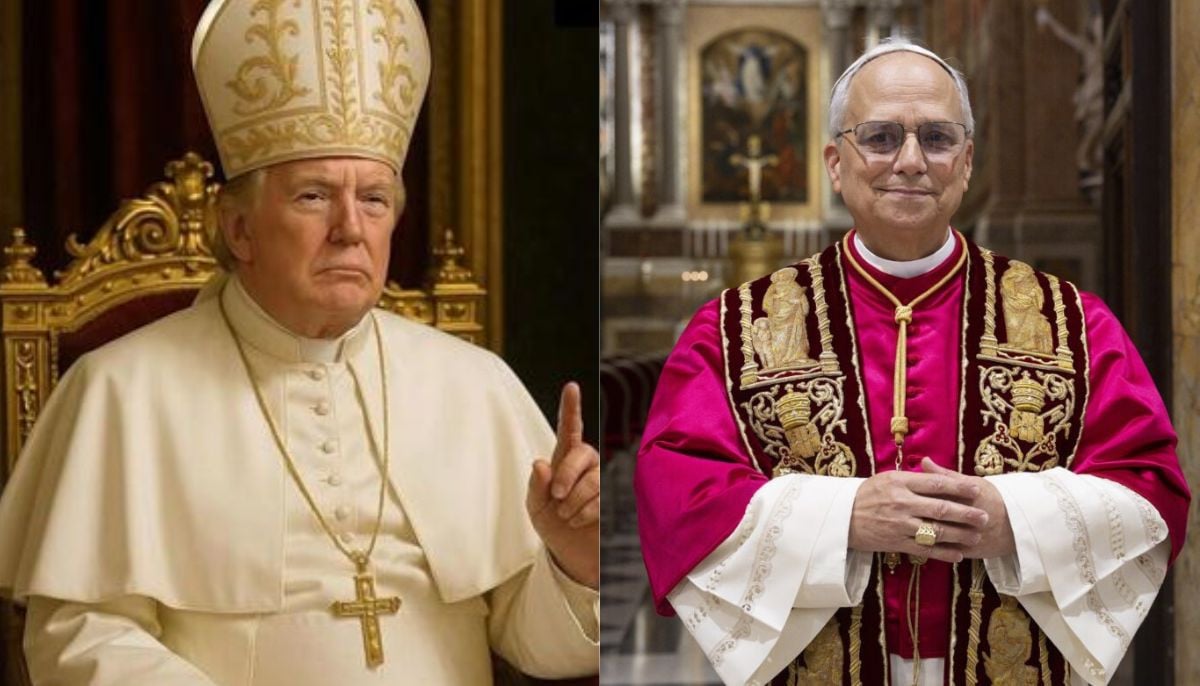
Even at the time of his election, President Trump posted an AI generated image of himself dressed as pope which drew significant criticism at that time.
The conflict between two most powerful people escalated when the United States and Israel launched joint airstrikes on Iran on February 28, 2026, in an operation called Epic Fury.
The pope expressed deep concern and called on all parties to stop what he described as a “spiral of violence before it became irreparable.”
As the war continued, Pope Leo's criticism got sharper. He condemned Trump's threat to destroy Iranian civilization as "unacceptable" and urged ordinary citizens to contact their political leaders.
Though the U.S. and Iran agreed to a two-week ceasefire on April 7, 2026, but till then the conflict between the pope and Trump had escalated and taken on a life of its own.
Trump goes on the offensive
The U.S. president went on offensive after a group of American Catholics made an appearance on CBS News “60 Minutes” segment and opposed the Iran war saying it did not meet the definition of just war under Catholic doctrine.
Trump took to Truth Social and responded by calling Pope Leo "weak on crime" and “bad for foreign policy.”
He also claimed the Church had chosen Leo as pope specifically because he was American, believing it would make dealings with the Trump administration easier.
Trump went on to claim that if he was not the president, Leo would never have become pope at all.
He wrote, "If I wasn't in the White House, Leo wouldn't be in the Vatican.” On a separate occasion, while speaking to the reporters, Trump said, “I'm not a big fan of Pope Leo."
Vance, Homan and Johnson join in
The U.S. Vice President JD Vance, himself a convert to Catholicism, suggested the Vatican should focus on matters of morality and leave American foreign policy to the president.
He also pushed back on a statement Leo had made suggesting that God is never on the side of those who wage war, asking whether God had not been on the side of the Americans who liberated Europe from the Nazis.
House Speaker Mike Johnson chimed in, saying the just war doctrine was a well-settled matter of Christian theology and that the Iran operation met that standard. White House border czar Tom Homan, describing himself as a lifelong Catholic, told reporters that the cardinals should stay out of immigration and focus on fixing problems within the Church itself.
The Pope's response
Despite massive pushback from the Trump administration’s high ranking officials, Pope Leo did not retreat. He clarified that his words were not intended as attacks on anyone and that the message of the Gospel was clear: “Blessed are the peacemakers.”
"I have no fear of the Trump administration, or speaking out loudly on the message of the Gospel," he said, adding, "We are not politicians. We don't deal with foreign policy from the same perspective he might understand it."
As the war of words continued, Pope Leo shared a striking post apparently directed at the U.S. president that read: "Woe to those who manipulate religion and the very name of God for their own military, economic, and political gain."
Where things stand now
Now, both men appeared to be retreating from further escalating the conflic but neither had backed down from their core position nor apologised to each other.
Speaking with the reporters Trump said he had no personal issue with the pope and acknowledged Leo had a right to speak his mind. He said they were "not fighting." When asked whether he would meet with Leo to resolve things, he said he did not think that was necessary.
Leo, speaking while travelling from Cameroon to Angola, said much of what had been reported about their exchanges had been inaccurate or over-interpreted. He noted that a speech he gave calling for peace had been written two weeks before Trump ever criticised him.
Leo said: "And yet as it happens, it was looked at as if I was trying to debate again the president. Which is not in my interest at all."
The feud might appear to be settling but the underlying disagreements are unlikely to disappear anytime soon.