FO slams India's 'baseless propaganda' linking Pakistan with Pahalgam incident
Islamabad urges New Delhi to refrain from all rhetoric, actions that may spoil peace efforts in Mideast
Published April 23, 2026
- India weaponising false narrative for domestic political gains: FO.
- Says New Delhi’s claims aim to divert focus from Kashmir issue.
- Islamabad asks New Delhi to act responsibly amid regional tensions.
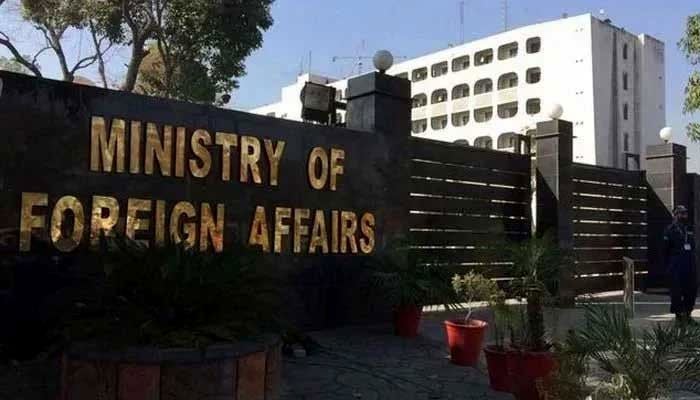
The Foreign Office on Thursday slammed India for resorting to a campaign of baseless allegations and propaganda linking Pakistan with the April 2025 Pahalgam incident.
“At a time when Pakistan, along with its international partners, is undertaking concerted diplomatic efforts for regional and international peace and security, it is deplorable that India has once again resorted to a campaign of baseless allegations and propaganda to link Pakistan with the Pahalgam incident,” the FO said in a statement.
The Foreign Office response came after the Indian Army issued remarks on the Pahalgam anniversary.
The longtime neighbouring adversaries went to war in May last year after India launched an unprovoked attack on Pakistan following the attack on tourists in Pahalgam, Indian Illegally Occupied Jammu and Kashmir (IIOJK), which claimed the lives of 26 people.
Without offering any evidence, New Delhi had accused Islamabad of orchestrating the deadly attack in Pahalgam — a charge that Islamabad denied and also asked it to hold a neutral investigation.
India followed the baseless accusations with unlawful missile strikes inside Pakistan, which resulted in the martyrdom of several civilians and security personnel.
Pakistan responded by downing seven Indian fighter jets, including three Rafale, dozens of drones, and destroying an S-400 defence system.
The war between the two nuclear-armed nations ended on May 10 with a ceasefire agreement brokered by the United States.
Lashing out at New Delhi, the FO, in a statement issued today, said: “It is unfortunate that, in the midst of an ongoing regional crisis, India remains focused on weaponising its false narrative against Pakistan for narrow domestic political gains.
After receiving a befitting reply to its misplaced adventurism in the form of Operation Bunyan-um-Marsoos last year, the Foreign Office said that such allegations constitute yet another chapter from India’s playbook of creating a smokescreen for its continued sponsorship of terrorism across the region.
“The fact remains that such propaganda campaigns cannot distract the international community’s attention from India’s continued occupation of Indian Illegally Occupied Jammu & Kashmir (IIOJK) and its denial of the right to self-determination to the Kashmiris, in violation of relevant UN resolutions.
“Nor can such gimmicks conceal the fact that India continues to undermine regional peace and security by resorting to inflammatory rhetoric, repeated provocations, and aggressive military posturing, including its illegal unilateral action to hold the Indus Waters Treaty in abeyance, in clear violation of international law,” the statement added.
It said that Pakistan hopes the international community will call on "India to demonstrate responsible behaviour and to refrain from all rhetoric and actions that may serve as a spoiler" to ongoing efforts aimed at regional and international peace and security.
A day ago, on the first anniversary of the Pahalgam attack, Federal Minister for Information Attaullah Tarar criticised New Delhi for failing to provide "credible evidence" for its allegations against Pakistan.
In a special televised statement, the minister said India had also sidestepped calls for an independent investigation into a "false flag operation".
Tarar said the Pahalgam incident reflects a mindset driven by "hollowness, illogical thinking, false pride, arrogance, and greed", adding that India has consistently been unable to address concerns raised over the episode and is yet to provide satisfactory answers despite the passage of a year.