Inside $30 million T.rex auction controversy: Why scientists are concerned?
Million dollar T.Rex skeleton ‘Gus’ heads to auction amid scientific controversy
Published July 14, 2026
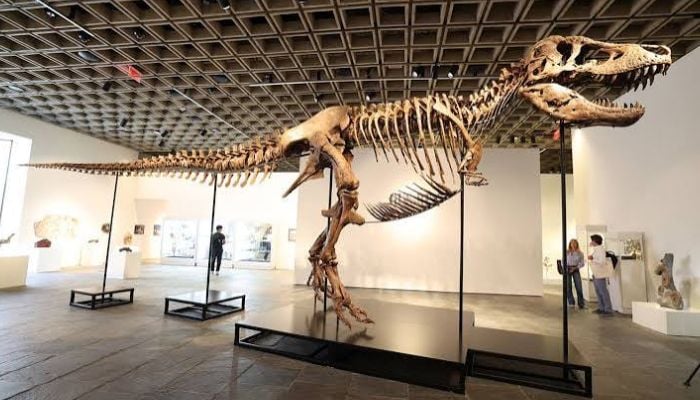
A 67-year-old Tyrannosaurus rex skeleton nicknamed “Gus” is set to auction under the hammer at Sotheby’s New York on Tuesday, July 14, with a presale estimate of $20-$30 million.
Experts suggest that the final price can also far exceed this figure.
The 38-foot-long and 12.5-foot-tall specimen was discovered on a South Dakota ranch in 2021, comprises 183 fossil bone elements and is around 61% complete by bone count.
He was named after the late rancher Gary “Gus” Licking, on whose land it was found; the skeleton represents one of the largest and most complete T. rex specimens ever discovered.
But the auction has reignited a fierce debate among palaeontologists about the commercialisation of scientifically significant fossils. With private collectors increasingly dominating the market, including celebrities and billionaires, researchers fear critical specimens are being lost to science.
The Society of Vertebrate Palaeontology opposes fossil sales and mandates its members study only specimens that are available publicly.
Professor Richard Butler of the University of Birmingham said: “The current trend towards dinosaur fossils being marketed and sold like rare artworks at vast prices is very concerning. A fossil not in a recognised museum collection can’t be studied and is therefore lost to research.”
The highest amount ever received from the sale of a dinosaur skeleton was $44.6 million for the Stegosaurus "Apex," which billionaire Ken Griffin bought in 2024 and then lent to the American Museum of Natural History. However, even a loan to a museum does not resolve the issue, as owners can withdraw any specimen at any time.
Since no institution is capable of bidding on such specimens, the future of Gus and hundreds of other specimens is decided between money and science.