Astronomers discover ‘raspberry sugar' floating near center of Milky Way
‘Raspberry sugar’ discovery suggests life’s building blocks are common in space
Published July 13, 2026
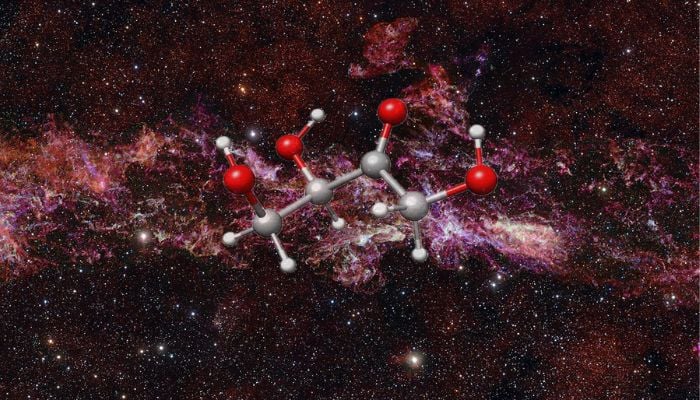
Astronomers have detected a sweet-smelling sugar molecule known as “erythrulose” floating in a vast gas and dust cloud near the centre of the Milky Way.
This molecule is naturally found in raspberries and used in self-tanning lotions.
The discovery, officially published on Monday, July 13, in the journal Nature Astronomy, marks the first time this molecule has been found in space.
Scientists working with two radio telescopes in Spain, the Yebes 40 meter and IRAM 30 meter telescopes, observed a dense cloud in space known as G+0.693-0.027 and found evidence of sugar in its gaseous form through comparisons between the telescope signals and lab tests.
This finding, while not indicating a planet full of aliens who have a passion for raspberries, provides a strong case for the existence of compounds vital to life across the universe.
In a statement, the research team stated: “Sugars are important molecules in living systems, helping to provide energy, build important biological structures, and form parts of genetic material.”
There are four carbon atoms present in erythrulose that can easily be converted into threose, a sugar believed to be a precursor to the first nucleic acids that evolved into RNA and DNA. They are also known as the blueprints for life.
This discovery helps confirm the hypothesis that sugars and other organic building blocks might be brought to the planet Earth by comets and asteroids or might have been present in the raw materials used for the formation of our solar system. Samples taken from asteroids, including the one returned by the NASA mission OSIRIS-REx from the asteroid Bennu, have produced other sugars and organic molecules.
Now scientists intend to look for more complicated sugars in space to determine how far prebiotic chemical reactions can advance before planetary formation occurs.