Robot spacecraft sent to save NASA Swift Observatory returns to Earth after failed mission
Swift has studied gamma-ray bursts and other extreme astrophysical phenomena for nearly 20 years
Published September 25, 2026
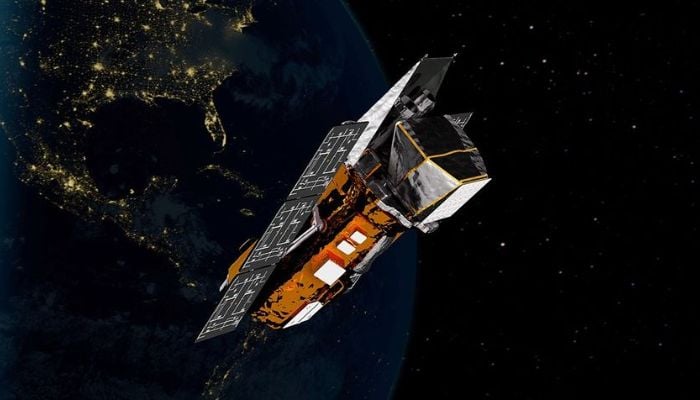
NASA's bid to save a 22-year-old space telescope is over and the robotic spacecraft sent for the rescue mission returned to earth today after a failed mission.
LINK entered Earth's atmosphere yesterday (Friday) after being in orbit for 85 days.
The plan for the spacecraft was to find NASA's 22-year-old Neil Gehrels Swift Observatory and boost its orbit using its thrusters. This would give the aging telescope at least a few more years in space.
NASA contracted Katalyst Space Technologies for $30 million to perform this task. LINK launched July 3, 2026 and after weeks in orbit, LINK finally reached an altitude of about seven or nine miles from Swift.
It actually photographed the observatory; however, LINK did not get anywhere near close enough to the telescope to make contact with it.
The problems began immediately after LINK's launch. Two of LINK's three reaction wheels, which are critical to controlling the spacecraft's orientation, ceased operation.
At one time during these initial problems, LINK spun out of control. Engineers successfully regained communication with the craft and a degree of control over it, but by mid-August, there was no longer sufficient propellant remaining for a safe capture maneuver.
As such, the retrieval efforts were canceled.
Swift, an approximately half billion dollar observatory, has studied gamma-ray bursts and other extreme astrophysical phenomena for nearly 20 years since launching in 2004.
The telescope has greatly exceeded its planned operational life span. Recent increases in solar activity caused the upper atmosphere around the Earth to expand. In doing so, it also created greater drag on Swift, causing it to lose altitude at a rate greater than anticipated. Unfortunately, Swift does not possess a propulsion capability to elevate itself.
Swift will reenter Earth's atmosphere later this year in November. Most of the spacecraft should be destroyed upon reentry.