Orcas are hunting great White Sharks around the world, scientists confirm
Orca brothers port and starboard linked to wave of great white sharks deaths
Published October 17, 2026
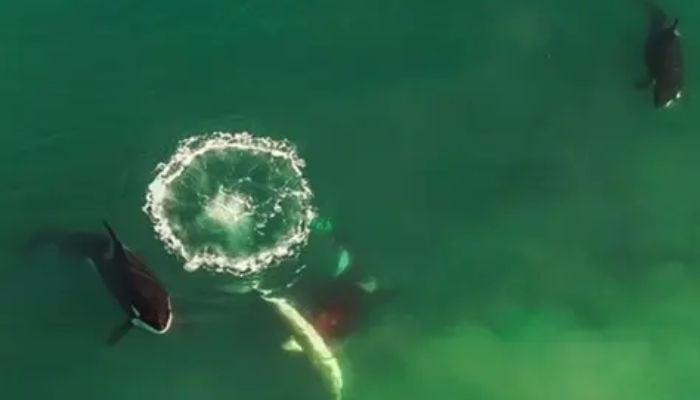
The killing of great whites by orcas has been reported in the waters of South Africa, California, and Australia, and the implications that the hunting behaviour would have on the marine ecosystem have been considered.
In fact, it all started back on May 3, 2017, when the body of a female great white, weighing 1,100 kilograms, washed ashore in Gansbaai, close to Cape Town, with a deep gash through which its 90-kilogram liver had been extracted. Five more corpses of great whites appeared with similar wounds in the coming months, as claimed by shark biologist Alison Towner of Rhodes University.
Two adult males, called Port and Starboard, who are supposed to be brothers judging by their dorsal fins that fold differently, were identified as the most probable perpetrators. The connection was officially established in 2022 based on video footage of a drone that caught three orcas chasing and biting a 3-meter great white off Mossel Bay.
The sharks quickly disappeared from Dyer Island, one of the best places in the world to witness a great white. "I'm not talking about a gradual decline, I'm talking about overnight, gone," said Towner.
According to scientists, killer whales hunt the livers of sharks as they are the most nutritious parts of the body, making up about 28 per cent of the weight of the body, with the liver comprising 90 per cent lipids.
According to Deborah Giles, a researcher at the University of California, Davis who studies killer whales, "It might not be new behaviour, but because of the new technology we're able to see it. Great white sharks were thought to be the apex predator in the ocean, but it's very clear that it's actually killer whales that are the top predator."
Scientists have noted that the disruption of the chain has far-reaching consequences, which include predation of African penguins, a critically endangered species.