Rare Win: Antarctica's ozone hole heals early, turning point for planet?
Ozone layer in the Earth’s stratosphere is essential for life on the planet
Published December 03, 2025
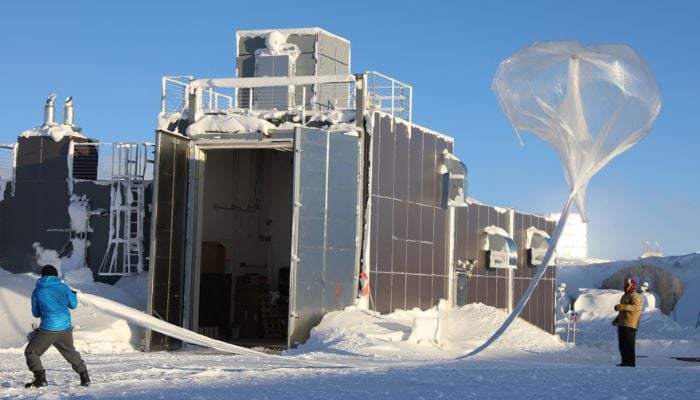
Scientists have shared a promising update amid the worsening impacts of climate change and global warming, revealing that the ozone layer is showing signs of recovery.
In a latest update on Monday, December 1, the Copernicus Atmospheric Monitoring Service (CAMS) shared that the ozone hole, observed annually over Antarctica, has closed. This marks the hole’s earliest closure since 2019.
The 2025 hole was the smallest in the last five years and experts have declared it a “reassuring sign” and appear optimistic that the layer might heal completely in the next couple of decades.
CAMS Director Dr Laurence Rouil said, “It reflects the steady year-on-year progress we are now observing in the recovery of the ozone layer.”
Each year in August, a region over Antarctica experiences severe ozone depletion, forming an ozone hole. The hole reaches its maximum size by September or October and starts shrinking by the end of November and December.
The ozone layer in the Earth’s stratosphere is essential for life on the planet, as it absorbs harmful ultraviolet radiation from the sun, thus protecting life on Earth.
The ozone hole was first discovered in 1985. It is formed by human-made chemicals, primarily chlorofluorocarbons (CFCs), which rise into the stratosphere. CFCs destroy ozone molecules, leading to severe thinning of the ozone layer over the Antarctic.
The Montreal Protocol was signed in December 1987 to protect the ozone layer as its depletion allows harmful UV light to reach the Earth causing skin cancer and damaging DNA.
The protocol phased out 99 percent of the ozone damaging chemicals whereas remaining one per cent still linger in Earth’s atmosphere with experts hopeful that it will eventually be eliminated.
Experts at the United Nations (UN) hope for a full ozone healing by 2040; however, CAMS experts’ expect it to fully recover between 2050 and 2066.