NASA confirms date for longest solar eclipse in 100 years
The longest solar eclipse for 100 years will darken skies from Spain to Somalia
Published December 09, 2025
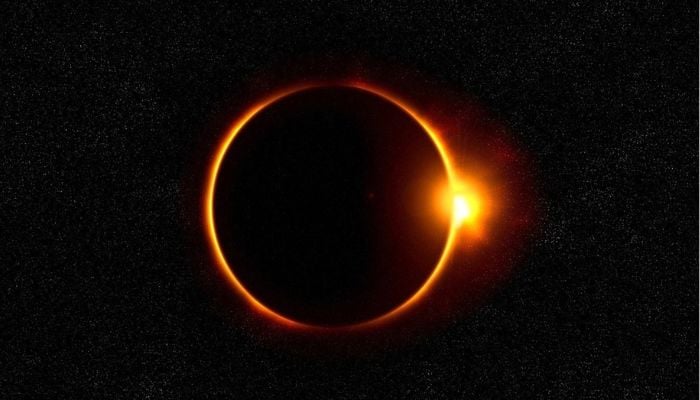
The National Aeronautics and Space Administration (NASA) has confirmed that the world will witness the longest solar eclipse in a century on August 2, 2027.
The eclipse’s totality will last for 6 minutes and 23 seconds. Totality refers to the period when the Moon obscures the entire disk of the Sun and only the solar corona is visible.
This surpasses the longest eclipse that lasted for 4 minutes 28 seconds over North America in April 2024.
In which continents will it be visible?
The shadow of the Moon will sweep across three continents. As mentioned in the detailed map of NASA, the path of totality will begin at sunrise over the Atlantic Ocean before making landfall in:
- Southern Spain and Gibraltar
- North Africa: Morocco, Algeria, Tunisia, Libya, and Egypt
- The Middle East: Saudi Arabia, Yemen
- The Horn of Africa: Somalia
The point of maximum eclipse will occur over Egypt, near the ancient cities of Luxor and Aswan.
Why is this eclipse so exceptionally long?
The duration of this eclipse is so exceptionally long due to a rare and perfect cosmic alignment in the background:
Proximity: The eclipse occurs just hours before the Moon reaches perigee (the point in the orbit of the moon or a satellite at which it is nearest to the earth). This will make the Moon’s apparent size in our sky larger.
Distance: The Earth will be near aphelion, its farthest point from the Sun in its annual orbit, making the Sun appear slightly smaller.
With this combination, the Moon will be able to block the Sun’s disk for an extended period as it moves across the sky.
Historical context and future eclipses
The 2027 event is considered the “longest eclipse for 100 years” but the theoretical maximum is 7 minutes and 32 seconds.
The last comparable event was on July 11, 1991 which lasted 6 minutes 53 seconds over the Pacific and the Americas.
For those who will miss the eclipse in 2027, the next eclipse of similar length will not occur until 2,114.
The next major long-duration eclipse accessible to a wide audience will be on August 12, 2045, which will cross the continental United States with over 6 minutes of totality.
How to watch the longest solar eclipse for 100 years?
For observers in the Americas and Asia, witnessing totality will require international travel.
Residents of the Northeastern tip of the United States (Maine) will be able to observe only a partial eclipse.
However, safety is paramount. Anyone who wants to observe the solar eclipse must use certified ISO 12312-2 solar viewing glasses or other indirect methods to prevent severe eye injury.