How Japan's $58B defense budget could shift Asia-Pacific security balance?
Japan’s offensive military shift could alter US-China rivalry in Asia
Published December 27, 2025
Japan’s Cabinet has approved a historic defense budget for the coming fiscal year. This marks a decisive and rapid military buildup focused on countering China’s growing assertiveness.
The move, which deepens a severe diplomatic rift between Tokyo and Beijing, is poised to change the security balance in the Indo-Pacific.
For fiscal 2026, Japan proposed a draft budget allocating over ¥9 trillion ($58billion). This is 9.4% more than the previous year.
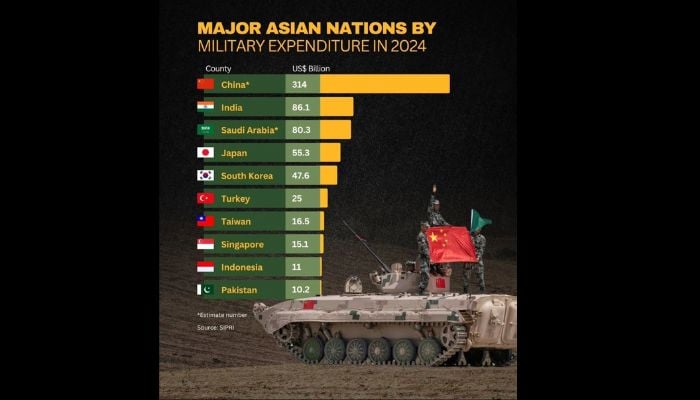
This is the fourth installment in an ambitious five year plan to double Japan;s annual defense spending to 2% of its GDP. This target is aimed to meet by early 2027, two years ahead of the schedule.
A budget built for deterrence
The increase in military budget highly focuses on acquiring advanced offensive and defensive capabilities. This is a stark departure from Japan’s post-war, strictly self-defensive approach.
Japan’s key military investments include:
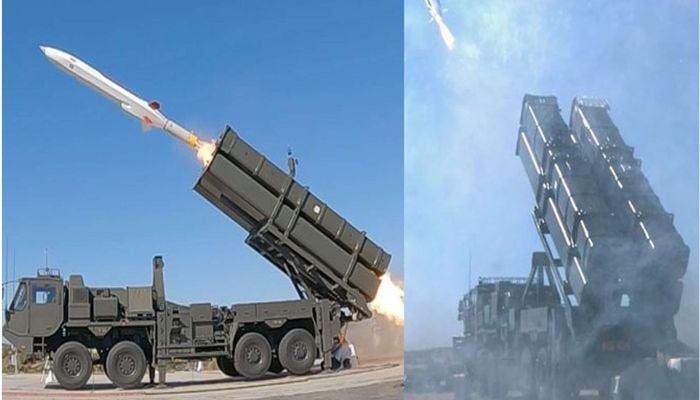
- More than ¥970 billion ($6.2 billion) is earmarked for “standoff” defense, including the accelerated deployment of domestically developed Type-12 surface-to-ship missiles with a range of around 1,000 kilometers. With this, Japan is capable of targeting distant enemies.
- A new ¥100 billion ($640 million) unmanned “shield system” will be developed that will create a layered coastal defense network of massive air, sea-surface, and underwater drones for surveillance and combat. This addresses personnel shortages by expanding monitoring reach.
- This budget will also fund next-generation arms including hypersonic missile research and joint development with Britain and Italy of a next-generation fighter jet. Air Self-Defense is also set to be rebranded to include space operations reflecting new frontiers in military competition
Countering escalating tensions with China
The increase in budget comes amid spiralling tensions with Beijing which have sharply deteriorated since November.
This was highly reflected in Japanese Prime Minister Sanae Takaichi’s declaration that a Chinese attack on Taiwan could constitute a “survival threatening situation” for Japan, potentially triggering its right to collective self-defense.
Following this statement, China showed a strong reaction imposing trade restrictions and accusing Tokyo of reviving militarism.
Chinese defense officials have also escalated rhetoric claiming Japan is “fuelling a space arms race” and even evoking memories of Pearl Harbor attack.
The friction is not merely diplomatic. Earlier this month, Japanese officials also protested when Chinese aircraft locked their targeting radar on Japanese planes during military drills.
This act was considered a prelude to potential engagement.
Broader regional implication
Japan’s new offensive military strategy extends beyond its own arsenal. The budget for the country's official security assistance (OSA) has also been raised to 125% (¥18.1 million equivalent to $116 million).
With this grant-based framework, there are “link-minded” military partnerships across Southeast Asia and the Pacific like the Phillipines, Fiji, and Bangladesh, focusing on building a network that can counter Chinese influence in the region.
This points towards a pivotal shift in the region. Japan is transforming from a passive U.S. ally under its security umbrella into an active, integrated partner with its own formidable deterrence capabilities.
It will play a major role in improving U.S.-Japan ties and will also introduce a more capable and complex independent actor in the region.