How China's BYD dethrones Tesla in EV sales?
BYD poised to become world’s biggest EV maker in 2025
Published December 30, 2025
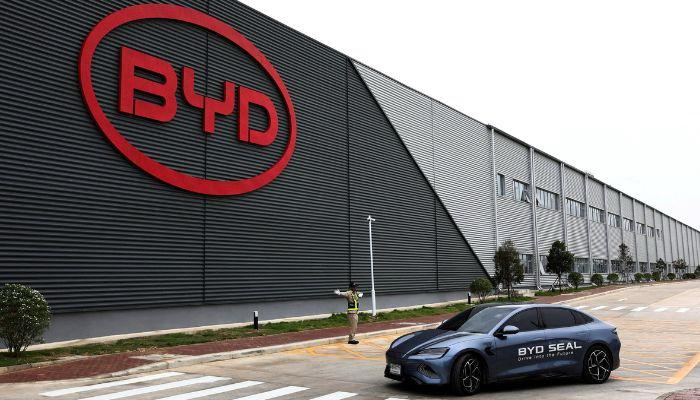
Chinese electric vehicle (EV) giant BYD is on its way to surpassing Tesla as the world’s largest seller of EVs in 2025. This marks a major shift in the global EV market, long dominated by the U.S. company led by Elon Musk.
Although the company has not unveiled the final sales figure of the year, the data so far make the outcome increasingly clear.
As of November 2025, BYD secured sales of 2.07 million EVs globally. In comparison, Tesla sold 1.22 million EVs by the end of September.
Considering these figures, analysts expect that Tesla will fall well short of BYD’s total.
As per FactSet consensus, forecasts were estimated to be around 449,000 vehicles in Tesla’s fourth quarter sales, bringing its full-year total to roughly 1.65 million. This marks a decline of nearly 8% year on year.
Deutsche Bank is even more cautious, projecting fourth-quarter sales of just 405,000 with sharp drops in North America and Europe and a smaller decline in China.
A primary factor behind Tesla’s slowdown has been the expiration of the $7,500 US tax credit for EVs at the end of September 2025, which temporarily boosted sales before demand for software.
According to analysts, U.S. markets now face a transition period as buyers adjust to higher effective prices.
Beyond BYD, Tesla also faces heightened competition from European automakers, affecting its overall sales.
In some markets, Tesla consumers also got shifted due to Musk’s public support for Donald Trump and his continuous inclination towards other right-wing figures.
BYD’s rise, however, has not been without challenges. It also faced intense price competition in China. Due to this, the company changed its approach, pushing aggressively into overseas markets, expanding exports, and enhancing production capacity abroad.
Another major obstacle was trade barriers. BYD faced U.S. imposition of 100% tariffs on Chinese EV imports as well as additional European duties. However, company’s timely response to these helps to grow its business further. It countered the sanctions through investing in local manufacturing, including new facilities in Hungary.
Although Tesla is about to lose its sales crown, it may yet find new momentum. Experts indicate that company's emphasis on autonomous driving technology as a potential growth driver from 2026 onwards.
Tesla plans to unveil more advanced “full self-driving” features and start production of its autonomous Cybercab robotaxi in April 2026. Besides these plans, the company is also about to roll out cheaper versions of its Model 3 and Model Y.
For now, BYD is in advantage, and undoubtedly it has earned its spot through its timely incorporated strategies.