CES 2026: Nvidia's key announcements include open AI models, physical AI, much more mind-blowing
At CES 2026, Jensen Huang showcased Cosmos model that predicts movements to revolutionise robotics
Published January 07, 2026
CES 2026 is in full swing—happening live in Las Vegas until January 9—and as an enthusiast, one could be pondering over the plans of Nvidia, one of the show's biggest participants.
To cater to that wondering, listed below are the key announcements, nearly everything Nvidia has announced during CES 2026 so far.
Nvidia's expansion beyond gaming
While there's no other saying over that Nvidia has established itself as a leader in the tech industry, not to mention being the world's most valued firm, as it recently surpassed a $5 trillion valuation. Besides, the company has reflected its focus moving onto something beyond consumer GPUs, now extending into factories, autonomous vehicles, and robotics.
At CES 2026, Nvidia made it clear that if something can be modelled, Nvidia wants to be the power behind it. This boast of ambitions marks a significant evolution in the company's strategy, as it is now willing to dominate various sectors by providing the necessary technology for simulation and automation.
The rise of physical AI
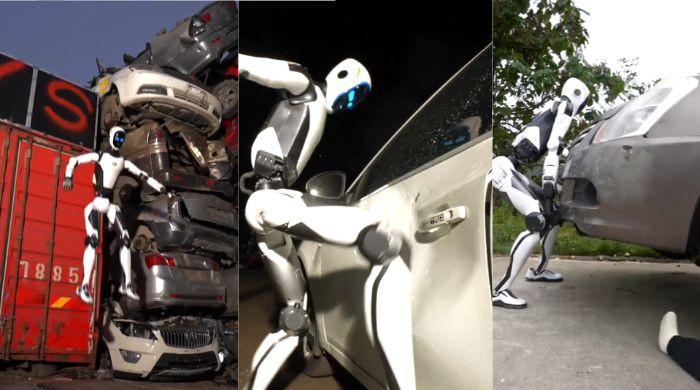
Another of the major highlights from Nvidia's presentation was the concept of "physical AI," meaning AI systems capable of not only generating content but also taking action in the real world. Nvidia CEO Jensen Huang showcased the Cosmos model, designed to simulate environments and predict movements, alongside Alpamayo, tailored for autonomous driving. This technology aims to revolutionise robotics and self-driving vehicles, as demonstrated by the Mercedes-Benz CLA's AI-driven navigation on stage.
What further consolidates the GPU maker's commitment to leading this domain is Nvidia's plans to launch a robotaxi service by 2027.
Nvidia's open AI models for robotics, healthcare and climate
Nvidia is deeply invested in strides to position itself as a big player in the AI landscape through openness, in terms of AI. Huang emphasised that the company is not just selling hardware but also providing open AI models that developers can utilise and adapt.
These models range from healthcare and climate science to robotics, indicating that Nvidia aims to become the foundational platform for AI systems across various applications.
This course outline suggests Nvidia's vision for being at the core of AI development, whether it pertains to massive data centres or individual desktops, ensuring its technology makes up the most-needed aspect of future AI.