NASA launches twin rockets BADASS, GNEISS to study mysterious Aurora secrets
NASA’s northern lights research could save satellites from geomagnetic disruptions
Published February 15, 2026
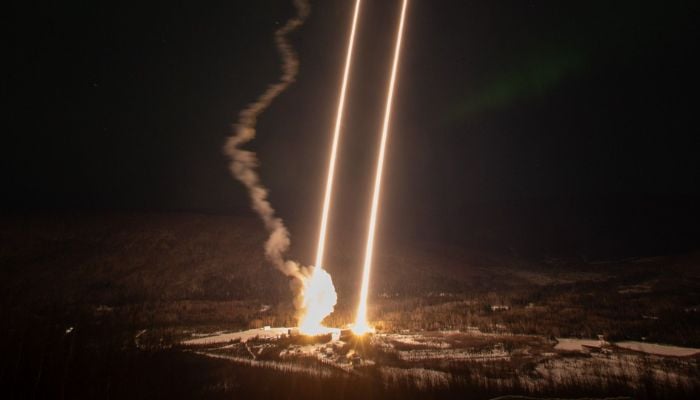
National Aeronautics and Space Administration (NASA) launched two suborbital sounding rocket missions from Alaska this week to assess the enigmatic phenomena known as “black auroras.”
Black auroras are rare, dark, and often overlooked, small-scale structures like rings, curls, or patches that appear as holes or voids within brighter, diffuse, dancing auroras.
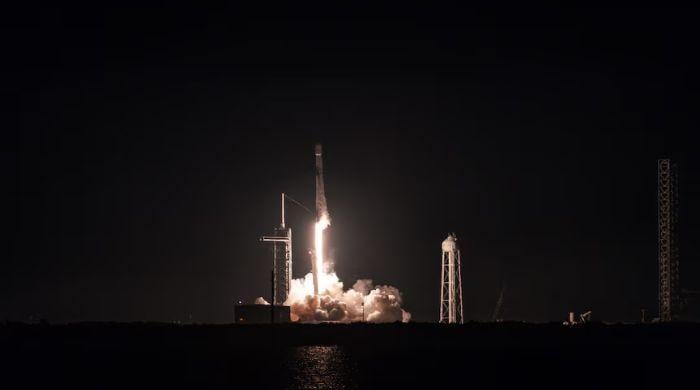
The Black and Diffuse Auroral Science Surveyor (BADASS) mission lifted from Poker Flat Research Range near Fairbanks in the early morning of February 9.
It reached an altitude of 224 miles before descending back to Earth.
The rocket was equipped with scientific instruments to observe black auroras, which are rare occurrences where electrons shoot upward into space instead of falling towards Earth, as they normally do.
The BADASS principal investigator, Marilia Samara, said, “We want to understand what causes this electron stream reversal.”
Another mission, titled the Geophysical Non-Equilibrium Ionospheric System Science (GNEISS), experienced the launch of back-to-back rockets on February 10.
It reached the peak altitudes of 198 miles.
The combined data of both rockets creates a “CT scan” of the electrical currents flowing beneath the aurora.
GNEISS principal investigator Kristina Lynch said, “We want to know how the current spreads downward through the atmosphere. It’s essentially like doing a CT scan of the plasma beneath the aurora.”
Both missions are of great importance as they help to comprehend auroral electrical activity.
Geomagnetic storms linked with auroras can disrupt satellites, endanger astronauts, cause power blackouts on Earth, interfere with radio transmissions, and force air travel diversions.
The data collected from the mission will aid in better understanding the complex electrical circuitry within Earth’s magnificent northern lights.