US economic growth slows sharply to 1.4% in fourth quarter
President Trump blames “The Democrat Shutdown” for decline in GDP
Published February 20, 2026
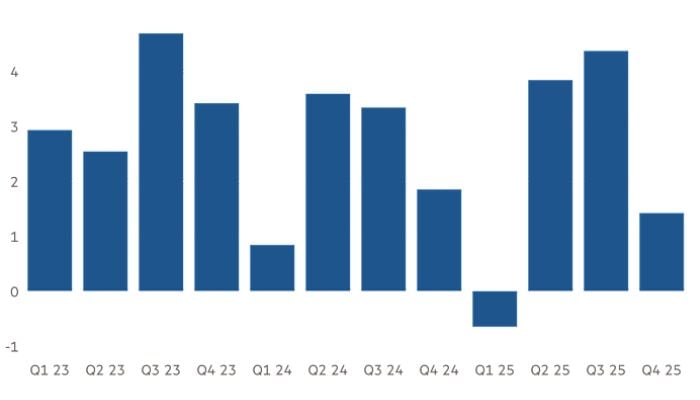
Growth in the U.S. economy has slumped to a mere 1.4% annual rate in the fourth and final quarter of 2025, much slower than the 4.4% growth in the final quarter of 2025, the Commerce Department unveiled on Friday, February 20.
The low GDP figure was far below economists' expectations of 3 percent growth.
The government shutdown in October-November was an important contributor, subtracting 1 percentage point from fourth-quarter growth as federal expenditures decreased at an annual rate of 16.6 percent.
Even with the overall slowdown, consumer spending has been robust, adding 1.6 percentage points to the growth. Americans continued to consume services, such as health care and travel, rather than goods.
Investment in businesses also supported itself, and AI-based investment was the driving force.
The investment in information processing equipment added 0.65 percentage points to growth, and software investment added 0.17 points.
An indicator of growth in the underlying trend of development, real final sales to private domestic purchasers increased at a 2.4% per annum rate, suggesting stability in consumer and business demand.
The report also indicated that inflation was above the Federal Reserve's target. Personal Consumption Expenditures price index increased by 2.9 percent per annum in the quarter.
During the entire year 2025, the GDP increased by 2.2 per cent compared to 2.8 per cent in 2024.
President Trump commented on Truth Social before the release, blaming “The Democrat Shutdown” for costing “at least two points in GDP.”
He also called for “LOWER INTEREST RATES” and attacked Fed Chair Jerome Powell as “Two Late' Powell is the WORST!!!”
The blended data lowers the chances of a Federal Reserve interest rate cut in March. In 2025, the economy added only 181,000 jobs, the lowest total since the Great Recession of 2009.
Economists refer to the prevailing situation as a K-shaped economy, in which high-income households benefit from rising stock prices and AI investment, while low-income consumers face inflation and sluggish wage growth.