Oil prices can hit $130-$140 per barrel following US-Israel attack on Iran
Oil markets brace for shock as US-Israel attack on Iran threatens global supply
Published February 28, 2026
The launch of “Operation Epic Fury,” a joint US-Israel military operation against Iran, has significantly affected the global energy industry, introducing a level of systemic risk to oil markets not witnessed in decades.
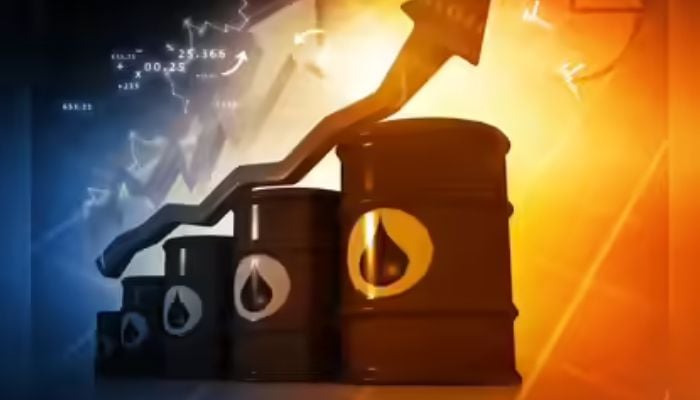
Following the strikes, the market saw an immediate Bent Crude spike to five months high. The rate went to $81 per barrel.
Analysts refer to an addition of “war premium” of $3 to $10 per barrel.
Earlier, the market anticipated a surplus of 2.3 to 3.1 million barrels per day (mb/d) for 2026. Usually, a surplus brings prices down. Even experts predicted that this glut would keep prices low or even make them cheaper.
But the current military situation has flipped that prediction on its head.
Iran sells about 2 million barrels of oil to other countries daily. In case war disrupts half of it, say, 1 million barrels vanish from the market due to closed ports, damaged infrastructure, or shipping companies’ hesitation to enter the war zone, then that expected “extra oil” disappears.
This pushes prices towards $80 to $90.
While Iran is OPEC’s fourth largest producer, pumping around 3.3 mb/d, its true influence lies in its geography.
Iran has long threatened to block the Strait of Hormuz, which is responsible for transferring about 20 million barrels of crude. This marks 20% of global consumption.
Following the Operation Epic Fury, the Islamic Revolutionary Guard Corps (IRGC) has indicated readiness to disrupt shipping via naval mines and missile attacks.
In case of a complete blockade, Brent crude can rise to $130 or $140 per barrel.
If crude reached $110, the petrol prices could hit 160p per litre in the UK. Such an increase can also add 1% to inflation in developed countries, complicating central bank efforts to cut interest rates.