FO dismisses US official's assertion on Pakistan missile capabilities
Pakistan's strategic capabilities are exclusively defensive in nature, says FO spokesperson
Published March 19, 2026
- FO says missile programme aimed at safeguarding sovereignty.
- Says missile programme rooted in deterrence doctrine vs India.
- Pakistan committed to constructive engagement with US, says FO.
ISLAMABAD: The Foreign Office (FO) on Thursday categorically rejected the recent assertion by US Director of National Intelligence Tulsi Gabbard alleging a potential threat from Pakistan's missile capabilities.
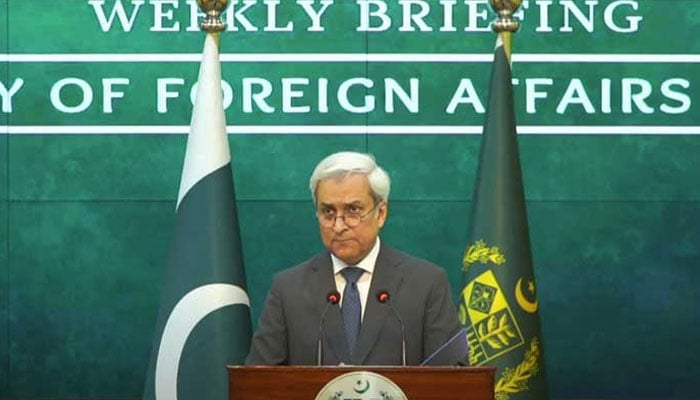
In a statement, FO Spokesperson Tahir Hussain Andrabi emphasised that Pakistan's strategic capabilities are exclusively defensive in nature, aimed at safeguarding national sovereignty and maintaining peace and stability in South Asia.
Andrabi made the remarks while responding to media queries seeking Pakistan's response to the statement made by the US Official.
A day earlier, the US spy chief Gabbard had identified Pakistan among countries posing a growing strategic concern, warning that Islamabad’s evolving long-range missile capabilities could potentially bring the American homeland within range.
Presenting the 2026 Annual Threat Assessment before the Senate Intelligence Committee, Gabbard had also named Iran, China, Russia, and North Korea as nations actively developing new missile delivery systems, including both nuclear and conventional warheads, which put the US within range.
She had noted that Pakistan’s ballistic missile development “potentially could include intercontinental ballistic missiles (ICBMs)” capable of reaching the US homeland.
In the statement today, the FO spokesperson said that Pakistan’s missile programme, which remains well below intercontinental range, is firmly rooted in the doctrine of credible minimum deterrence vis-à-vis India.
“In contrast, India's development of missile capabilities exceeding 12,000 kilometres reflects a trajectory that extends beyond regional security considerations and is certainly a cause of concern for the neighbourhood and beyond,” he added.
The spokesperson further said that Pakistan remains committed to constructive engagement with the US, anchored in mutual respect, non-discrimination, and factual accuracy.
“We urge a more measured and considered approach that aligns with South Asia's strategic imperatives and advances peace, security, and stability across the region,” he added.