April full moon is not actually pink: Here's how it looks like
April full Pink Moon reaches its peak on Thursday, April 2
Published March 30, 2026
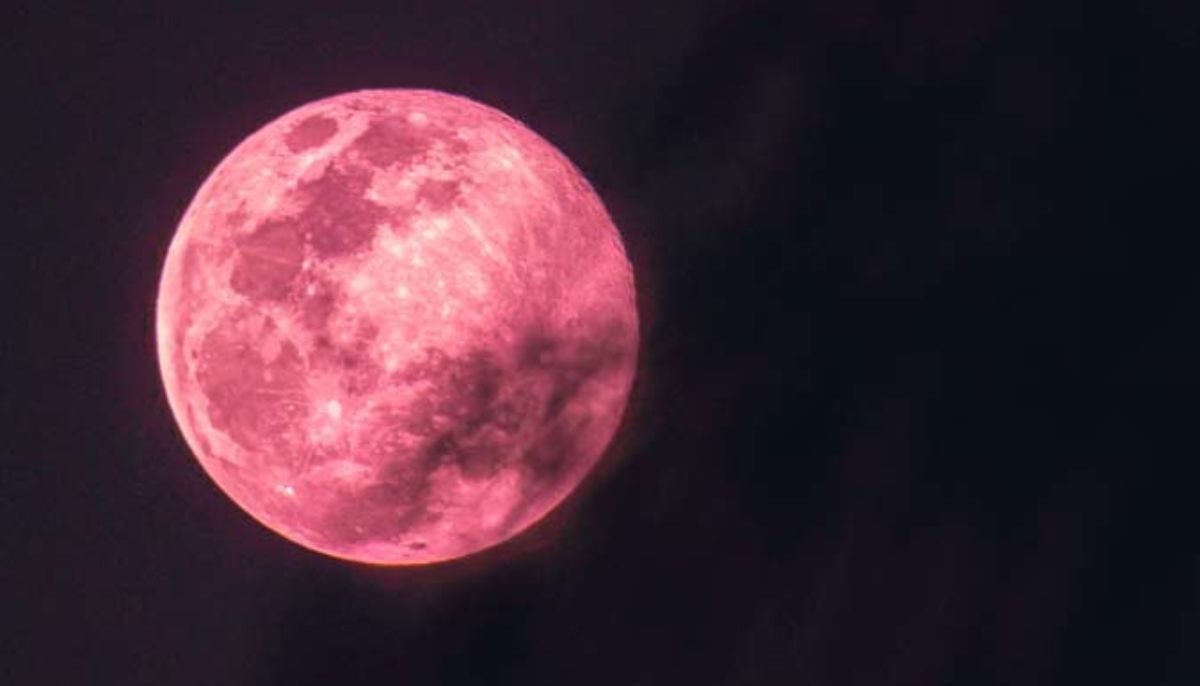
Despite being called Pink Moon, it will not actually appear pink.
The name stems from Native American traditions, associated with the spring bloom of moss phlox (Phlox subulata), a pink wildflower native to eastern North America.
Rather than pink, the moon is expected to appear orange or copper rather than pink.
Such a colour will appear as the sunlight it reflects travels through a denser part of Earth’s atmosphere, which scatters blue and violet light while allowing redder hues to reach our eyes.
April's full moon reaches its peak at 03:12 BST on Thursday Morning, April 2, when the moon rises low on the eastern horizon shortly after sunset.
Viewing tips and weather forecast
To experience the best view, find a location with a clear eastern horizon, open fields, or coastlines.
There’s no need for special equipment, though binoculars can help reveal fine details.
In the UK, the weather is expected to have a cold front moving south across England and Wales, bringing cloud and rain.
However, the clearest skies are expected over Scotland and Northern Ireland, offering better viewing conditions.
Why does Pink Moon determine Easter?
This full moon has great religious significance as the Paschal Moon. Easter Sunday in Western Christianity is the first Sunday after the first full moon following the spring equinox.
The spring equinox occurred on the 20th of March. With the Pink Moon occurring on the 2nd of April, Easter Sunday is going to be celebrated on the 5th of April this year.
Alternative names and cultural significance
Pink Moon is also referred to as Sprouting Grass Moon, Egg Moon, and Breaking Ice Moon, all marks the beginning of spring.
It is also called the Fish Moon, which refers to the upstream spawning of shad fish.
The next full moon to look out for is the Flower Moon on 1 May, followed by a rare Blue Moon on 31 May, which is the second full moon in a single calendar month.