‘City killer' asteroid to pass extremely close to Earth next week: why NASA detected it late
In 2013, an asteroid measuring around 59ft in diameter struck the Russian city of Chelyabinsk
Published May 15, 2026
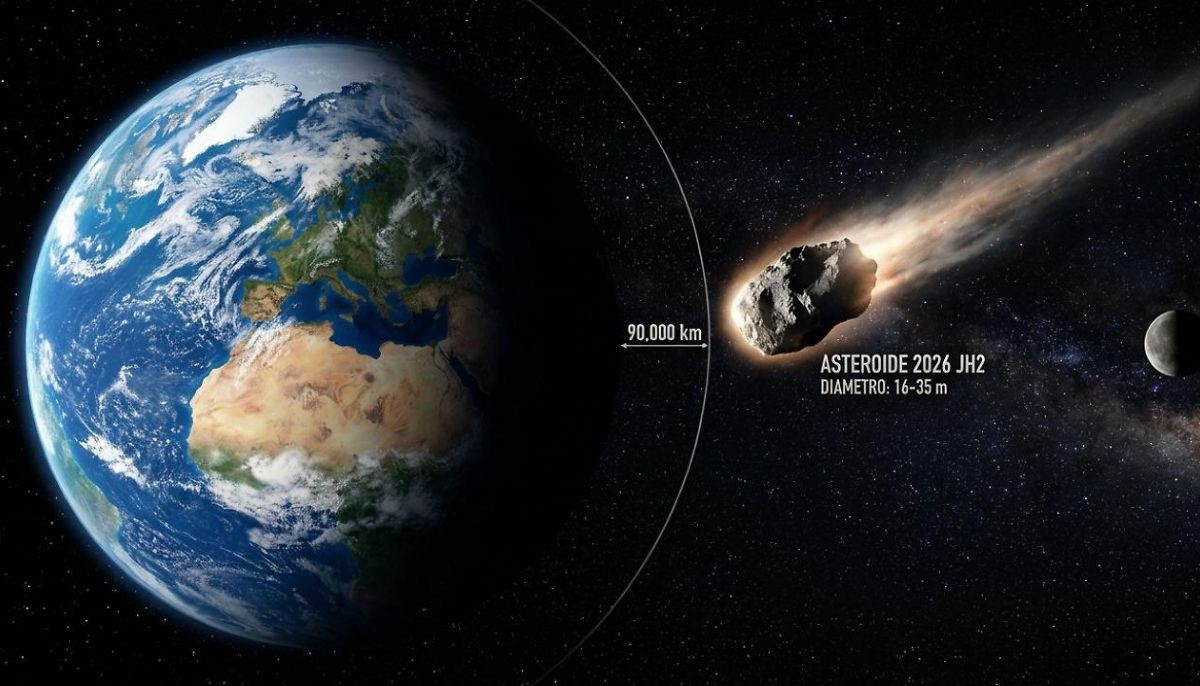
A giant asteroid with a potential to obliterate a whole city is set to make a close flyby the Earth early next week. The space rock, estimated to be the size of around four London buses, will pass at a distance of around 56,000 miles from our planet late on Monday night.
Astronomers describe the distance as extremely close, with one mentioning that the asteroid is going to pass “as close as it can without hitting.”
For reference, 56,000 miles is a quarter of the distance between Earth and the Moon. The space rock called 2026 JH2 is between 52 and 115 ft in diameter.
Despite its potentially destructive size, the space object was not detected by the National Aeronautics and Space Administration (NASA) until a few days ago, raising serious questions about the early detection of potentially destructive asteroids.
Fortunately, simulations run by the experts suggest that there is no chance of an impact for at least 100 years.
In an interview with New Scientist, Mark Norris from the University of Lancashire, said, “It’s the kind of thing that would ruin a city quite efficiently, if it hit.”
Experts warn that if the JH2 were to hit the Earth it would result in an explosion comparable to the Chelyabinsk meteor.
For context, In 2013, an asteroid measuring around 59ft in diameter struck the Russian city of Chelyabinsk, located at its border near Kazakhstan.
Reports suggest that only 0.05 percent of the original rock made it to the ground but the explosion was so massive, around 30 times stronger than the nuke dropped on Hiroshima.
Around 1,500 people were injured and 3,600 homes were destroyed or partially damaged.
It is expected that JH2 won’t be visible with naked eye but star gazers and space enthusiasts can have a chance to have a glimpse of the asteroid with amateur telescopes under dark sky conditions.