International space station alert explained: What caused air leak, what can happen if it doesn't stop
NASA reversed the evacuation orders approximately two hours after issuing them
Published June 05, 2026
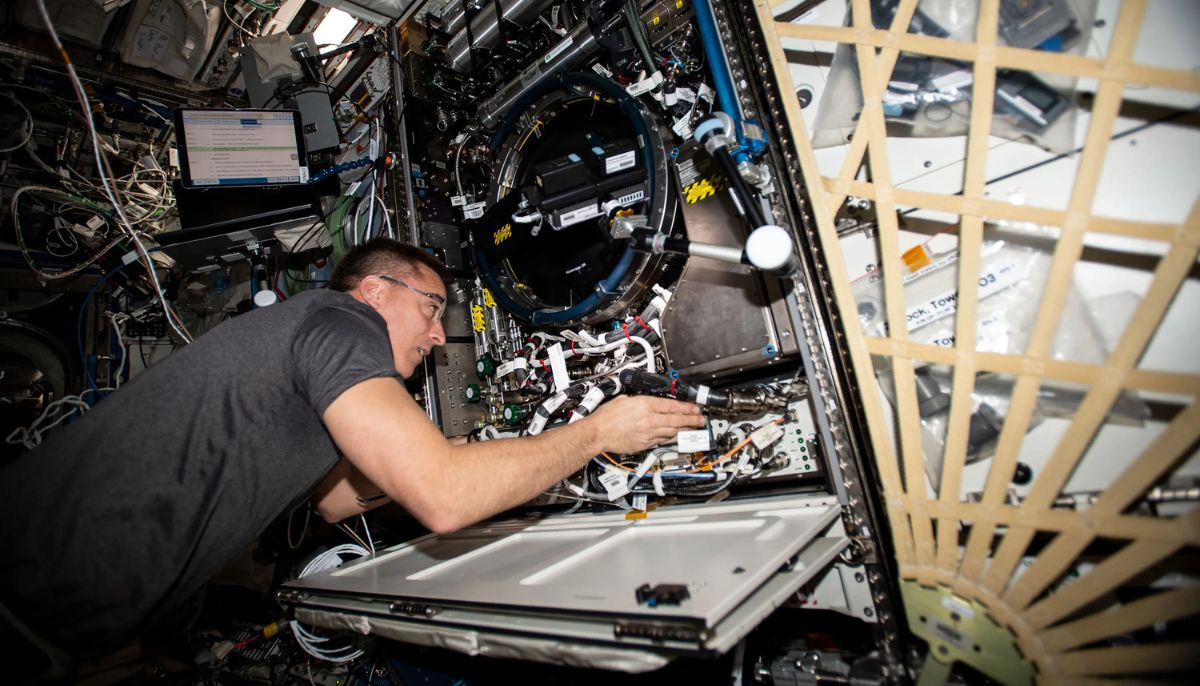
The National Aeronautics and Space Administration (NASA) has ordered five astronauts aboard the International Space Station (ISS) to shelter their spacecraft on Friday morning, June 5, 2026.
The evacuation orders came when Russian cosmonauts attempted to repair a worsening air leak in the station’s Russian segment.
The four-member SpaceX Crew-12 crew, consisting of NASA astronauts Jessica Meir and Jack Hathaway, European Space Agency astronaut Sophie Adenot, and Russian cosmonaut Andrey Fedyaev, together with NASA astronaut Chris Williams, was told at 9:04 a.m. ET to board the docked Crew Dragon spacecraft and put on their space suits for a possible escape from the station.
After about two hours, NASA reversed evacuation orders when they realised that the leak rate was under control.
The leak was spotted in the transfer tunnel of Russia’s Zvezda service module, which is a significant structural component of the orbital laboratory.
It’s been five years since NASA became concerned about cracks and air leaks. The inspector general at NASA calls them “a top safety risk.” One senior NASA official confirmed that the leak rate increased from about 1 pound of air per day to 2 pounds.
ISS maintains an atmosphere that is very similar to Earth’s at sea level, but not identical. The pressure is maintained at 14.7 pounds per square inch, with a composition of roughly 78% nitrogen and 21% oxygen. Air leaks are the escape of these gases through a crack into the vacuum of space.
For now, NASA has taken the situation under control. The cracked areas were accessed with the help of saws by Russian cosmonauts Sergey Kud-Sverchkov and Sergei Mikayev. However, NASA officials disagreed with the chosen method, prompting the shelter order “out of an abundance of caution.”
However, if the breach increases in size beyond the capacity of the station to make up for the loss, pressure will be lost, oxygen levels will decrease, and the astronauts will suffer from hypoxia (lack of oxygen) and decompression sickness, as divers do when ascending too rapidly.
However, well before this turns out to be fatal, NASA will evacuate the entire space station using the docked spaceship, rendering the ISS uninhabitable if the damage cannot be undone. Thus, while death may not be an issue, lack of breathable air is the biggest threat.