Super El Nino is building in Pacific, forecasters warn of record breaking heat
US forecasters estimate a 97% chance that El Nino will continue into early spring 2027
Published July 16, 2026
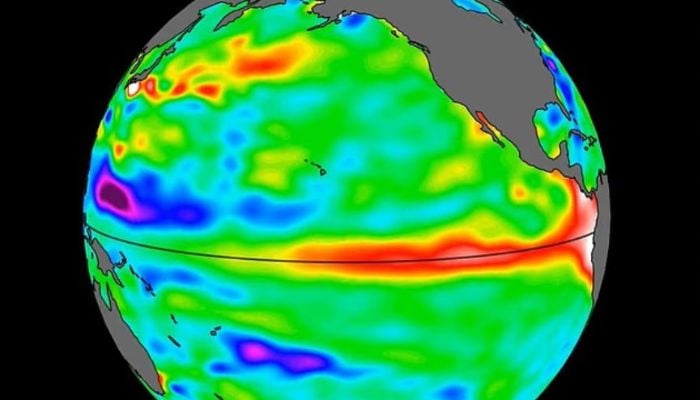
Super El Nino is building in the Pacific right now and forecasters have warned that the coming year might be the hottest on record. This comes after this year’s severe heatwaves resulted in 10,000 excess deaths in Europe, and also forced France to shut down its nuclear reactors.
According to the World Meteorological Organisation (WMO), there exists an 86% probability that at least one year between 2026 and 2030 will become the hottest year, breaking 2024's record of being the hottest year. This marks an increase of 6% from last year’s 80% chance.
2024 hit 1.55C above pre-industrial levels and the upcoming year due to Super El Nino could go higher.
Many people assume the hottest temperatures arrive as soon as El Nino begins; however, that is not how it works. Even if the Pacific Ocean warms, it usually takes three to five months for the warming effect to spread across the planet. This delay is why forecasters believe that effects of El Nino will be observed more prominently in 2027 than in 2026.
Forecasts have become increasingly confident that this El Nino will be unusually powerful, even though such predictions often become less certain over time. Some experts have described it as a "super El Nino," while others have nicknamed it "Godzilla" because of its potential intensity.
U.S. forecasters currently estimate a 97% chance that it will continue into early spring 2027.
The Australian Bureau of Meteorology says the warm Pacific waters could keep pushing global temperatures up well past 2026, into 2027 as well. Australia's own hottest year remains 2019, with 2024 not far behind in second place.
For the unversed, El Nino is a natural cycle where the Pacific Ocean heats up and dumps that extra warmth into the atmosphere. It usually means drier weather for Australia, southeast Asia and southern Africa, and wetter conditions across parts of the Americas and East Africa.