Gigi Hadid reacts to father Mohammad Hadid's emotional refugee story
Supermodel Gigi Hadid left heartbroken by classmates' notes in father’s school yearbook
Published June 16, 2026
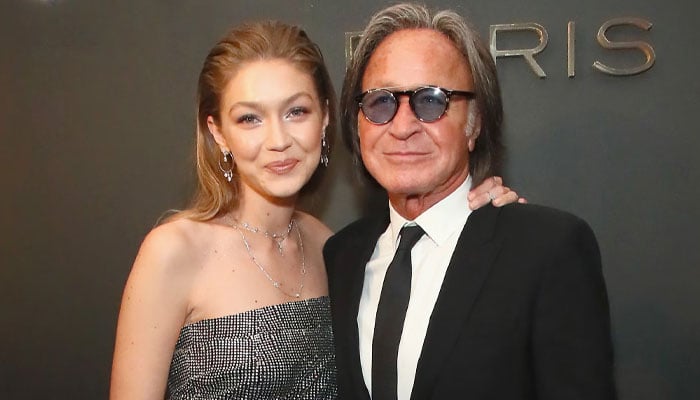
Gigi Hadid reflected on a bittersweet discovery in father Mohammad Hadid’s high school yearbook.
The father of Gigi and Bella Hadid recently appeared on his partner Keni Silva’s talk show In Heels with Keni Silva, where he discussed his journey as a Palestinian refugee.
His elder daughter reposted a snippet of the episode on her Instagram Stories and shared a deeply personal family memory.
The model, who is in a relationship with Bradley Cooper, revealed that reading through her father's American high school yearbook was both a cherished and heartbreaking experience, particularly after discovering messages from classmates wishing him a "safe return home."
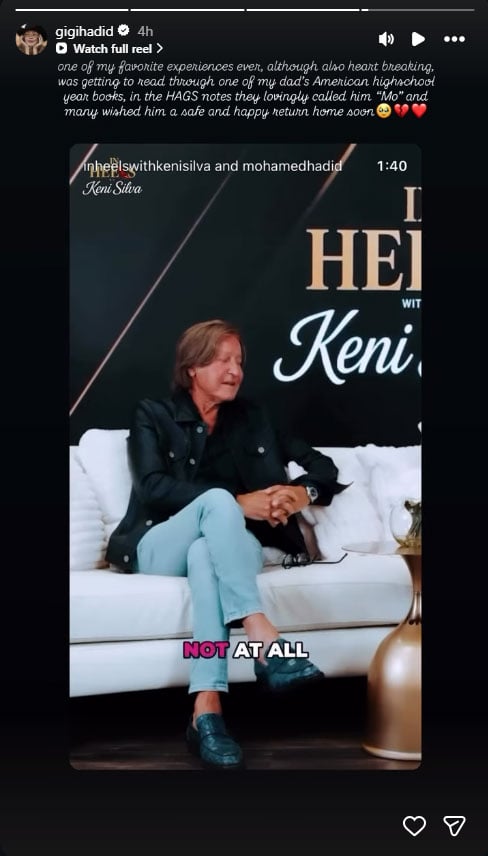
After reposting an interview clip of her father, Mohammad Hadid, recalling his experience immigrating to the United States as a child, the model shared why reading his high school yearbook years later left her both touched and heartbroken.
“One of my favorite experiences ever, although also heart breaking, was getting to read through one of my dad's American highschool year books, in the HAGS notes they lovingly called him ‘Mo’ and many wished him a safe and happy return home soon,” she wrote over the clip attached with a teary eyes, broken red heart and a red heart emoji.
Notably, HAGS stands for "Have A Great Summer," a common phrase American students wrote in each other's yearbooks.
What likely struck her was the irony and sadness of those messages. Her father had already been displaced multiple times, from Palestine to Syria, Lebanon, Tunisia, Greece, and finally the United States.
Yet his classmates were casually wishing him a "safe return home," probably assuming he would simply go back somewhere for the summer.
For Mohammad, however, the idea of "home" was much more complicated. As a Palestinian refugee, he had been separated from his homeland since infancy and had spent much of his childhood moving between countries.
The preview documented Mohammad describing the experience of being an immigrant and refugee child who arrived in the U.S. with little or no English and had to adapt to a completely different culture and school system.
“I was first grade, tenth grade in Washington Lee High School. Which is a high school, which is the hardest time, I think, to come,” he recounted. “The time in, at that time in 1970, I came in the 60s, 64, 63, 64, so the schooling system was different than today.”
“Now you have, in schools you have English as a second language, you have everything else, but at that time, if you don't know English, you're stuck, you're sitting there like a lost duck, and you actually don't know what they're saying, you don't know what you're reading, you're just looking for someone to help you,” Mohammad added.