7 major earthquakes in 24 hours: Why is seismic activity spiking?
From Venezuela to Japan to California, a surge of powerful quakes has struck in just one day
Published June 25, 2026
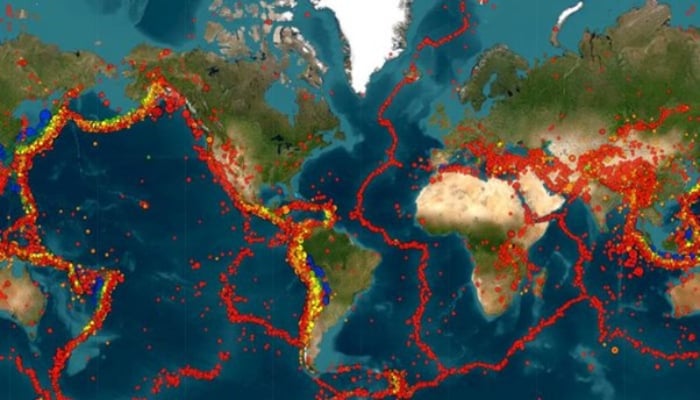
In the past 24 hours, the Earth has moved dramatically. Seven significant earthquakes have rattled the globe, including two devastating tremors in Venezuela, a 6.9 magnitude quake off Japan’s coast, and a 5.6 magnitude in Northern California.
The numbers are striking, with 1,351 earthquakes of all magnitudes worldwide in 24 hours. Among these, two were above magnitude 7, one between magnitude 6 and 7, four between magnitude 5 and 6, and 43 between magnitude 4 and 5.
The most devastating one struck Venezuela, where a 7.2 magnitude and a 7.5 magnitude killed at least 164 people. It marks the country’s most powerful earthquake since 1900.
Additionally, a 6.9 magnitude quake hit Japan’s northeast coast, prompting an emergency government response.
In the United States, a 5.6 magnitude earthquake hit northern California near Willits, the region's strongest since 1940
Why the spike?
The increasing seismic activity is due to plate tectonics. The outer layer of Earth is divided into sections called tectonic plates that constantly move, albeit slowly. When the stress builds up along plate boundaries and is suddenly released, earthquakes occur.
Venezuela is found along the boundary between the Caribbean and South American plates. Japan is one of the most earthquake-prone regions in the world, responsible for one out of every five magnitude 6 or larger quakes in the world.
USGS stated that the double earthquake in Venezuela is “a complex, rupture-interaction process” where one quake triggers another.
While seven significant quakes in 24 hours are notable, experts stress it’s not necessarily unusual. The Earth’s crust is constantly in motion, and clusters of seismic activity happen periodically.
Scientists are continuously monitoring aftershocks and analysing whether these events are connected or not.