Florida sounds alarm as Burmese Pythons spread to new region: See which areas at risk
Scientists fear ecological collapse as invasive Pythons spread northward
Published July 21, 2026
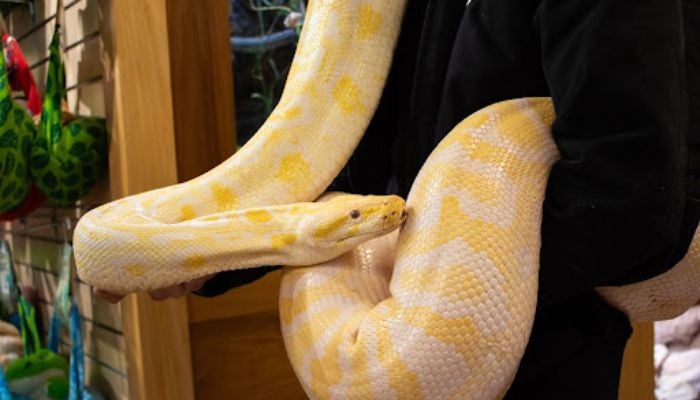
Florida wildlife officials confirm new breeding populations of Burmese Pythons in Charlotte County, establishing a new area of Southwest Florida.
This marks a concerning expansion beyond the snakes’ longtime stronghold in the Greater Everglades.
There were an increase in the number of pythons reported by FWC in this region beginning from 2020; some of the places where the reports came from include Rotonda West, Placida, Englewood East and South Gulf Cove.
According to EDDMapS, there were 78 pythons captured, found dead or sighted in Charlotte County, with 61% of the reports since 2024.
Wildlife officials confirm that this is not due to natural migration from the Everglades. Rather, the new population is believed to have started with captive python that escaped or were intentionally released and eventually started reproducing.
This distinction is significant as it suggests new populations can become established far from the main invasion front.
Burmese pythons are a native species of Southeast Asia that gained popularity in the exotic pet trade industry. Around 180,000 Burmese pythons were imported to the U.S. from 1975 through 2018. A self-sustainable breeding population of the species was found in South Florida by the year 2000.
Once established, the massive constrictors can have a devastating effect on native wildlife. These pythons are generalist apex predators that eat birds, rabbits, raccoons, opossums, bobcats, deer, alligators, and other animals.
Currently, the high-risk counties include:
- Charlotte
- Collier
- Broward (west)
- Miami-Dade
- Monroe
- Palm Beach
- Hendry
- Glades
- Lee
- Sarasota
- Duval
Earlier research indicates that the presence of Burmese pythons has led to drastic declines in some native mammal populations. Scientists are now concerned that a similar pattern can be seen in other parts of Florida if new populations grow unchecked.
Considering the risk, FWC has already increased its effort in the area. Starting in June 2024, the agency’s Nonnative Fish and Wildlife Program hired two part-time python technicians to conduct surveys and remove snakes three times per week in highly concentrated areas.
For now, the biggest challenges for researchers are to estimate how large the population is and whether it can be contained before the snakes spread farther into Florida.