'Producing inquisitive, knowledgeable society can help counter extremism'
The working group discussed education forms, the ninth in a series conveyed by Pak Institute for Peace Studies (PIPS)
Published May 03, 2017
ISLAMABAD: A working group has stressed that any attempt to counter extremism from the society cannot ignore reforms in the education sector and it should be aimed at achieving a knowledge-based society. Only then can individuals be engaged be more immune to the monolithic messaging of militants.
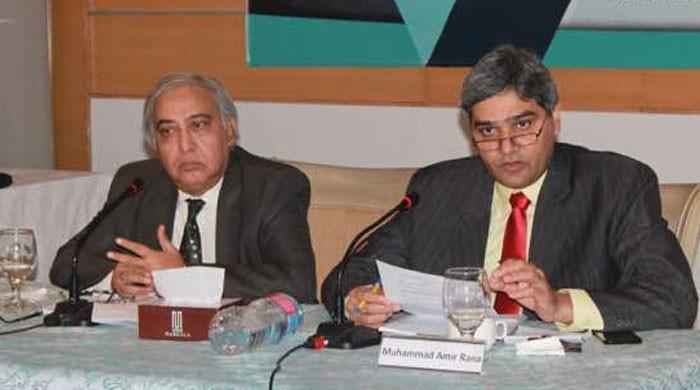
The working group discussed education forms, the ninth in a series conveyed by Pak Institute for Peace Studies (PIPS), an Islamabad-based think tank, on countering extremism in the country.
The group called for inculcating positive ingredients of culture in the education, besides taking actions ranging from revisiting curriculum to regulating all types of educational institutions.
The working group blamed the trend to the dearth of intellectual rigor in the varsities, suggesting that universities be oriented towards research. Several members called for breaking the chain of education to pure commercial needs. “The trend of creating university for the sake of university shall be discouraged.”
Members underscored that education is a right of every citizen. The Article 25-A of the Constitution also ensures free education at lower-level, but this right is not granted, they noted.
They called for some sort of accountability mechanism be adopted, pointing to the national and provincial legislatures as the right forums in overseeing effective implementation of all the provisions about education.
The group called for establishing statehood on the basis of equality of citizens and acceptance of cultural diversity in the country. These values are often denied by extremists. Education can be a powerful medium in instilling those values, shrinking space for militants. As a policy principal, the group recommended, fundamental human rights, as enshrined in the constitution shall be made the basis of citizenship education.
Moreover, policies shall be adopted for standardisation of education, having certain common goals and objectives, the working group said. It debated the rationale of the presence of a wide variety of schools. The group called for bringing them under some regulatory mechanism and for carrying out academic audit of all types of schools, especially foreign-funded, international, Islamic, and private schools.
Noting that extremists have also targeted schools or those going to schools, the participants suggested creating suitable conditions in militancy-affected areas like tribal areas, enabling girls education, who face a variety of constraints, including from militants.
They suggested an independent inter-provincial board be constituted to oversee curriculum development, which produce the minds of the future. In the History and Pakistan Studies books, the contribution of non-Muslims in Pakistan should be acknowledged, besides lauding non-warrior role models, such as poets, activists.
The working group also called for reforming religious education sector, asking the provinces to regulate madrassahs and shape their curriculum.
The participants included Dr. Syed Jaffar Ahmed, University of Karachi; A.H. Nayyer, educationist; Robina Sehgal, educationist; Dr. Qibla Ayaz, former vice chancellor, University of Peshawar; Zehra Arshad, education activist; Afrasiyab Khatak, former senator; Yaqoob Bangash, historian.
Umer Orakzai, development professional; Romana Bashir, peace-building activist; Rashad Bukhari, development worker; Dr. Aamir Abdullah, Islamic scholar; Dr. Hussnul Amin, International Islamic University, Islamabad; Dr. Khalid Mahmood, teacher; Azhar Hussain, education worker, and Muhammad Amir Rana, director, PIPS, were also among the contributors.