World's largest dinosaur track site discovered in Bolivia, capturing ‘ancient superhighway'
Over 18,000 dinosaur tracks found in single Bolivia site
Published December 10, 2025
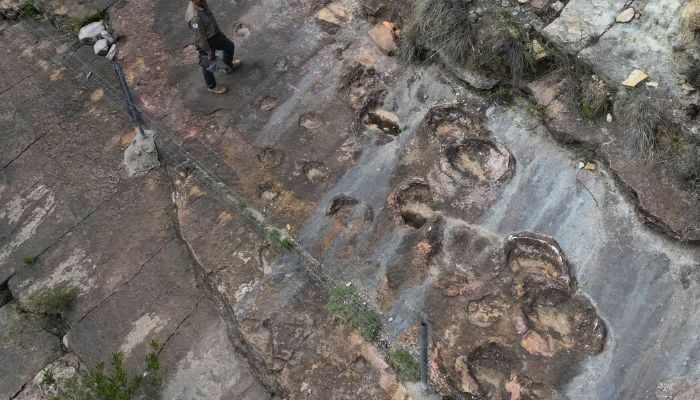
Scientists discovered over 18,000 tracks, citing the world's largest single site of dinosaur footprints in a vast plateau in the Bolivian Andes.
The tracks are reportedly preserved for 70 million years.
The discovery was initially published in a peer-reviewed journal PLOS One. The discovery emerged after conducting six years of fieldwork led by paleontologists from California’s Loma Linda University.
16,600 footprints were documented meticulously by the team, in the Carreras Pampa area of Toro Toro National Park.
The footprints were of theropods (a bipedal carnivore group that includes Tyrannosaurus rex) as well as an additional 1,378 “swim tracks” left by dinosaurs paddling through an ancient lake.
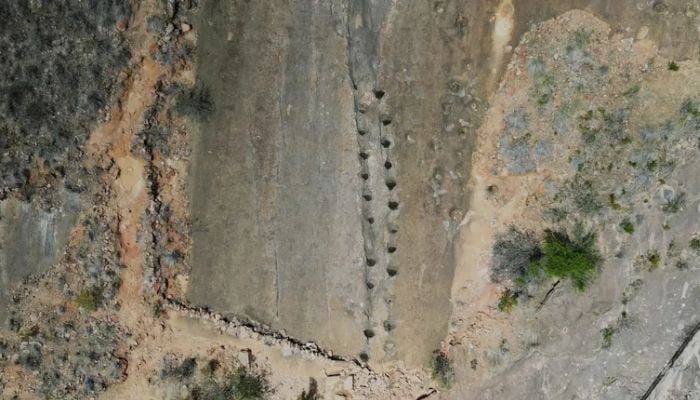
Co-author Roberto Biaggi stated, “There’s no place in the world where you have such a big abundance of theropod footprints.”
“We have all these world records at this particular site,” he added.
The footprints include a range of impressions including tiny 10cm prints left by chicken-sized dinosaurs to massive 30cm stomps from creatures roughly 33 ft tall.
Unique geological settings enable the preservation of these footprints. The area was once the muddy shoreline of a large freshwater lake, rich in fine carbonate sediment that solidified like natural cement after being rapidly covered by fresh layers of mud and sediment.
Such natural conditions allow exceptional preservation enabling a vivid snapshot of daily dinosaur behaviour rarely provided by bones alone.
Researchers identified 11 distinct track types, including sharp turns, claw drags, and tail trails, indicating the site was a heavily trafficked route.
Despite finding extensive footprints, no dinosaur bones were found at Toro Toro. This suggests that the area was a transit route instead of a habitat.