Toyota introduces robotaxi service to rival Tesla, Waymo
Toyota's robotaxi is backed by Toyota Motor China, GAC Toyota, and Pony.ai
Published February 11, 2026
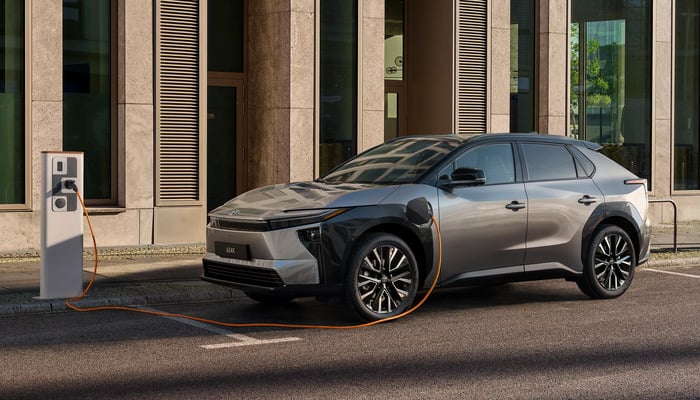
The immensely popular automaker, Toyota, has introduced its robotaxi, built on the Toyota bZ4X, in collaboration with the Chinese autonomous driving firm Pony.ai, to compete directly with leading robotaxi services from Tesla and Waymo.
The disclosure of Toyota's first mass-produced robotaxi service marks a significant step for Toyota as it transitions from prototype testing to real-world deployment.
The joint venture, backed by Toyota Motor China, GAC Toyota, and Pony.ai, is expected to manufacture over 1,000 bZ4X robotaxis in 2026, with commercial rollouts set to gradually take place across China's tier-one cities.
This version of the Toyota robotaxi service differs from previous prototypes that were primarily showcased, since these robotaxis are designed for practical use on public roads.
The technology behind Toyota's robotaxi
The primary element of Toyota's robotaxis is Pony.ai’s latest seventh-generation autonomous driving system, which has dramatically reduced the cost of the self-driving kit by 70% while utilising 100% automotive-grade hardware. The partnering firm is hopeful for expanding its robotaxi fleet to over 3,000 vehicles by the end of 2026.
Toyota's robotaxi features
Under the hood, Toyota bZ4X-based robotaxis are equipped with features familiar to users of modern ride-hailing apps, including Bluetooth-based automatic unlocking, voice interaction, online music, pre-trip climate control, and enhanced braking and acceleration for improved passenger comfort.
These robotaxis have been built using the Toyota Production System and adhere to Toyota’s principles of Quality, Durability, and Reliability (QDR).
While Tesla and Waymo's focal points mainly revolve around advanced software, Toyota is prioritising scale, cost control, and manufacturing.
With the US robotaxi landscape witnessing greater competition than before and Waymo operating around 2,500 fully autonomous vehicles, Toyota's foray in this domain shows its commitment to advancing autonomous driving tech, although initially in China only.