'Spectacular!' BBC journalist's tearful reaction to Artemis II liftoff sparks online buzz
'Oh my goodness that is spectacular,' said tearful BBC Journalist Rebecca Morelle
Published April 02, 2026
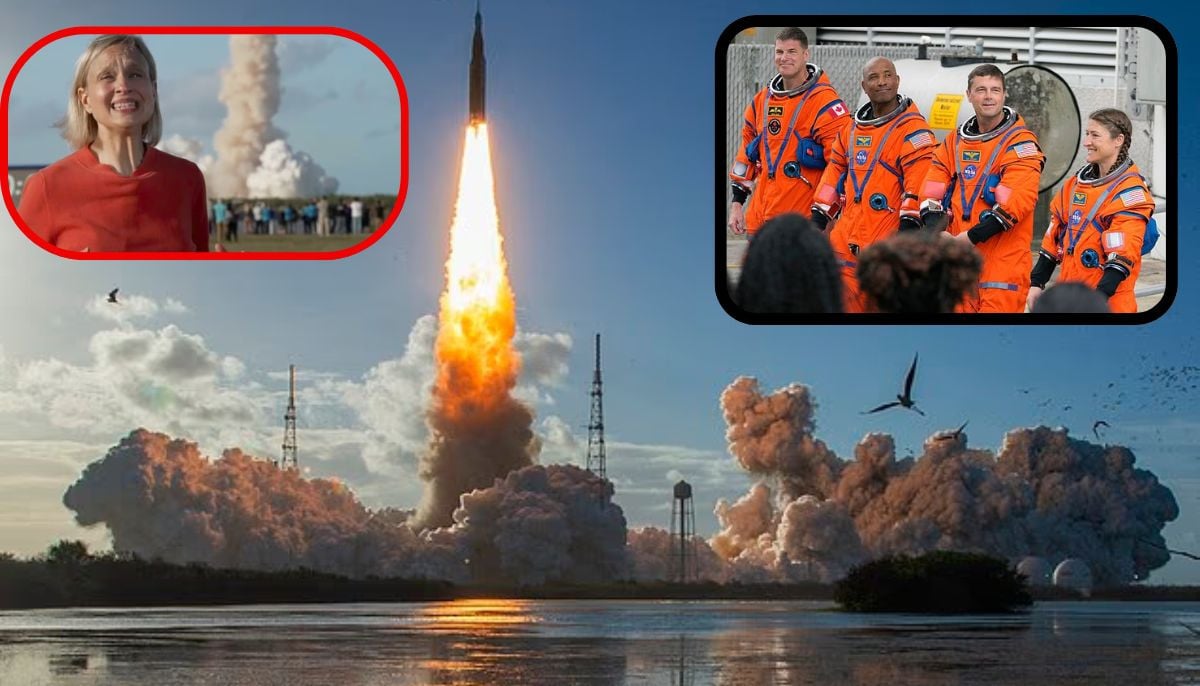
"Spectacular!"—the single word a BBC journalist used to describe NASA’s Artemis II liftoff was all it took to send the internet into a frenzy.
April 1 marks the beginning of NASA’s Artemis era with the successful launch of Artemis II.
BBC science editor Rebecca Morelle got tearful witnessing the historical liftoff of Artemis II at Kennedy Space Center, Florida, on April 1, 2026.
NASA has launched Artemis II, carrying four astronauts on the Orion spacecraft, which is now orbiting Earth, where it will then start its voyage orbiting the Moon on a 10-day NASA ambition mission.
If the mission remains successful, then NASA aims to return back to the Moon, sending astronauts by the end of 2028.
The BBC science journalist couldn’t hide her emotions while reporting on-camera.
The BBC editor, Rebecca Morelle was in Florida to cover the historical launch of Artemis II, and she uttered the word “Spectacular” spontaneously after witnessing the liftoff.
As the rocket blasts off into the sky, Morelle became tearful, saying, “Oh my goodness that is spectacular."
“It’s not just want you to see and you hear as the rocket lifts off. You can feel the force of it through your body. This is the most powerful rocket that NASA has ever built,” BBC editor continues her on-camera reporting.
The rocket carries the first crewed Moon mission in over five decades.
It is a milestone achievement as Artemis II will take the four crew members onboard farther into space than any human has ever gone before.
By achieving this, they will set a new record, surpassing the previous one set by Apollo 13 in 1970.
NASA crew members will spend the first two days conducting extensive systems checks, including testing Orion’s life-support, propulsion, navigation and comm systems to make the spacecraft is ready to dive deep into space.